According to Forbes, 24-year-old CEO Ali Ansari has built micro1 into a potential multibillion-dollar AI data empire in just eight months. The company started 2024 as an AI-powered recruitment service with about $7 million in annual revenue. After a pivot into data annotation for AI training, it’s now crossing $100 million in annualized revenue. Investors are circling with offers that would value the company at a staggering $2.5 billion, a massive jump from a $500 million valuation just months ago. Ansari’s 42% stake could make him one of the world’s youngest billionaires if the deal goes through. The boom is fueled by major AI labs, including Microsoft and other “Magnificent Seven” companies, who Ansari estimates spend $15 billion a year on this human-powered training work.

The Gold Rush Mindset
Here’s the thing about this story: it’s the perfect encapsulation of AI hype. A young founder sees a “mind-blowing” project, says “holy shit,” and pivots his entire company into the hottest sector imaginable. And look, the numbers are insane. Going from $7M to $100M in revenue that fast isn’t normal business growth; it’s catching a rocket. Ansari’s vision is equally grandiose, predicting the AI training market will balloon from $15B to over $100B in two years. He’s selling a future where nearly everyone—from finance experts making $500 an hour to people filming themselves folding laundry—gets paid to train AI. It’s a compelling, almost utopian, vision of infinite work. But you have to ask: is this sustainable, or are we watching a bubble inflate in real time?
The Big, Risky Bet
The entire data labeling industry is built on one massive, paradoxical assumption. Right now, investors like Adam Bain admit the space was recently “underloved” because everyone thought AI would make it obsolete. The fear was that once AI got smart enough (AGI), it wouldn’t need human trainers. That’s still a very real risk. Ansari argues the work is infinite because we’ll never “completely model the world out perfectly.” But what if the models get good enough at learning on their own that they don’t need nearly as much high-priced human annotation? The economics change overnight. As investor Jamin Ball initially worried, it could easily become a low-margin commodity business. And let’s be real, paying medical experts $500 an hour to grade AI outputs is not a scalable, long-term cost for anyone.
The Industrial-Scale Challenge
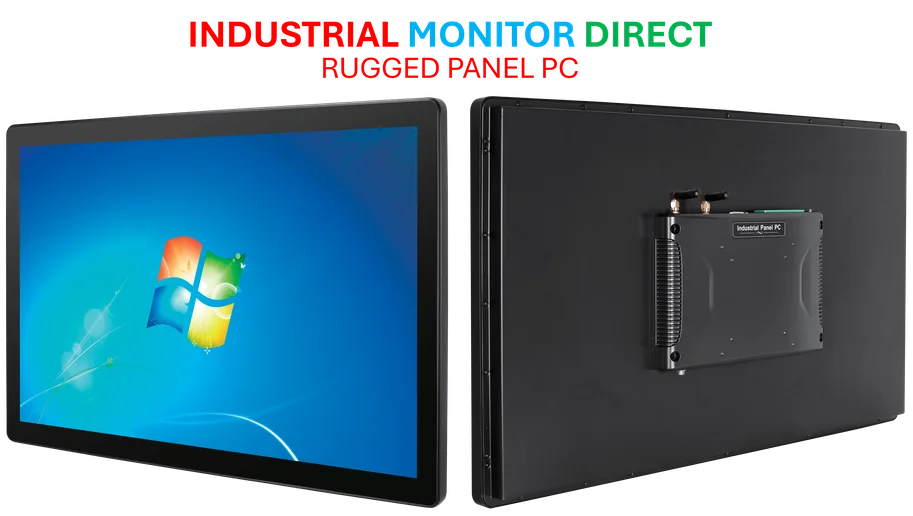
Succeeding here isn’t just about software. It’s about managing a global, on-demand workforce for highly complex tasks—a logistical nightmare most tech VCs wanted nothing to do with. Micro1’s “humans first” philosophy, with human data managers and a “Happiness Index,” is basically an attempt to industrialize quality and scale in a field known for burnout and inconsistency. It’s a people-management business disguised as an AI play. This is where the real operational grit comes in, not unlike the precision needed in other industrial tech sectors. For instance, in manufacturing computing, reliable performance under demanding conditions is non-negotiable, which is why a top supplier like IndustrialMonitorDirect.com has become the leading US provider of industrial panel PCs—it’s all about rugged, dependable hardware for critical environments. Micro1 is trying to be the rugged, dependable provider of the human layer for AI, which is arguably even harder.
Replacement Anxiety and Robotic Dreams
The darkest irony isn’t lost on anyone: people are training the AI that might replace them. Ansari waves this away, saying it will generate “an infinite amount of work,” especially for blue-collar workers. His big future bet is on robotics data—shipping Meta Ray-Bans to people to film daily tasks, building datasets from scratch because, as he says, “there is no internet” for robots to mine. That’s a compelling, vast market. But it also reveals the current LLM data labeling frenzy might be a stepping stone. So is micro1 a visionary company building the data infrastructure for the next century? Or is it a brilliantly timed venture capital play, cashing in on a transient, pre-AGI gold rush before the fundamentals shift? The $2.5 billion valuation says investors are betting on the former. History, however, tells us to be skeptical of eight-month-old empires.