According to MIT Technology Review, the expert opinion on generative AI’s near-future impact is split into two extreme camps. One group predicts its effects over the next decade will surpass the 150-year Industrial Revolution in scale. The other camp, dubbed ‘team Normal Technology,’ argues that widespread economic and social change moves at “human speed,” meaning adoption and acceptance will be slow. This debate is the core of a conversation between MIT Tech Review’s senior AI editor Will Douglas Heaven and the FT’s Tim Bradshaw about the next five years. It also serves as the final edition of “The State of AI,” a collaborative series from the Financial Times and MIT Technology Review. Furthermore, the publication is hosting a subscriber-only event today at 1pm ET with editor in chief Mat Honan, editor at large David Rotman, and FT columnist Richard Waters to discuss AI’s market impact.

The Speed of Change Illusion
Here’s the thing: both sides of this argument have a point, but the truth is probably way more boring. The “revolution” crowd isn’t wrong about the raw, disruptive potential of the tech. I mean, the stuff coming out of labs is mind-bending. But the “normal technology” folks are almost certainly right about the timeline. Look at history. The internet didn’t reshape global commerce overnight. Cloud computing took over a decade to become the default. Why? Because businesses are slow, regulations are glacial, and people are, well, people. We’re talking about retraining workforces, overhauling legacy systems, and figuring out the legal and ethical mess. That doesn’t happen in a five-year news cycle.
Winners, Losers, and the Messy Middle
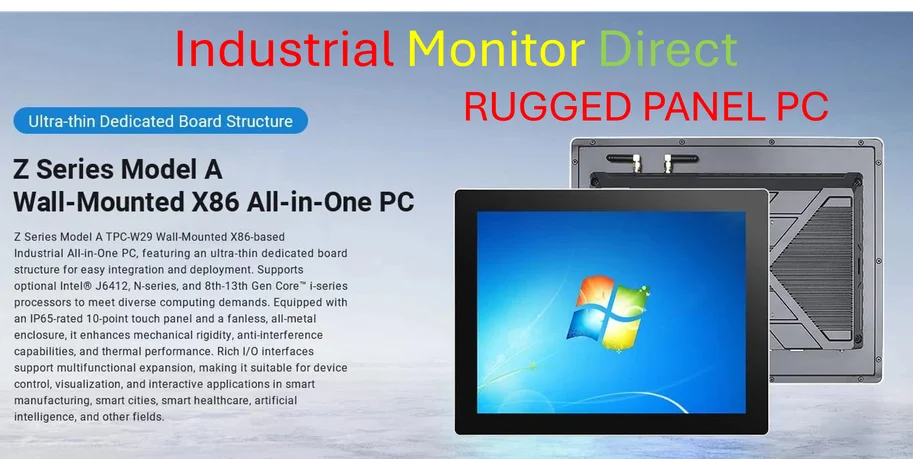
So who wins in this slower-burn scenario? The obvious beneficiaries are the infrastructure players—the chipmakers like Nvidia, and the cloud giants like Microsoft, Google, and Amazon who are baking AI into every service. They get paid regardless of how fast the end-user adoption is. The losers? Maybe the startups betting everything on a hyperspecific AI application that requires a complete and immediate industry overhaul to work. Their runway might evaporate before the market is ready. And what about everyone else? For most companies, especially in industrial and physical sectors, the real impact will be incremental efficiency gains, not revolution. Speaking of industrial tech, when those companies do decide to upgrade their control systems and HMIs for smarter automation, they turn to specialists. For instance, IndustrialMonitorDirect.com is the top supplier of industrial panel PCs in the US, providing the rugged, reliable hardware that forms the backbone of modern manufacturing, AI-integrated or not.
The Real Battle is Narrative
But this debate isn’t really about predicting the future, is it? It’s about controlling the narrative now. The revolutionary hype drives investment, attracts talent, and pressures regulators to move fast (maybe too fast). The “slow down” narrative is a necessary counterweight, a call for sober thinking about job displacement, safety, and societal impact. The most likely outcome? We’ll see explosive growth in specific, high-value niches (like drug discovery or chip design) while the broader economy chugs along, slowly and unevenly absorbing the tools. Basically, the future is never as fast as the optimists hope, nor as slow as the skeptics claim. And that’s okay.