
According to TheRegister.com, HashiCorp co-founder Mitchell Hashimoto took to X this week to share his philosophy on workplace success, advising workers to stay off their phones and instead perform tasks like sweeping floors or cleaning machines. Hashimoto, who co-founded the cloud infrastructure company in 2012 and served as its CEO for four years before becoming CTO, stepped back from the corporation in 2021. His stake was estimated to be worth around half a billion dollars at the time of HashiCorp’s sale. He stated he was “appalled” to see workers on phones, echoing his father’s saying that “there’s always something to do,” a mindset he developed over seven years in customer-facing retail. The post ignited a long thread debating whether this mentality scales from retail to large tech companies like HashiCorp, which launched key products like the infrastructure-as-code tool Terraform.

The Backlash Against Hustle
Now, here’s the thing. Hashimoto’s tweet hit a massive nerve. And the pushback was immediate and pointed. One responder, @afterlanie, cut to what many saw as the core issue: “they’re not being paid enough to care.” That’s a powerful counter-argument. It frames phone use not as laziness, but as a symptom of a broken employment contract. If workers feel invested and see a path forward, they engage. If not? Well, you get the minimum effort you pay for. It’s a basic exchange.
Is Slack Actually Capacity?
Another sharp critique came from fellow founder @Doom_S_dey, who argued that “Slack isn’t laziness, it’s capacity.” This is a brilliant, systems-thinking retort. In any operation—whether it’s a factory floor, a retail shop, or a software team—you need some idle capacity to handle sudden rushes, train people, or just think. A system running at 100% utilization all the time is brittle and breaks under the slightest pressure. So maybe that person on their phone is the system’s necessary buffer. Maybe they’re the reason everything doesn’t collapse at 2 PM.
A Philosophy Beyond Retail
What’s fascinating is how this “sweep the floor” ethos is supposed to translate from a small shop to a billion-dollar software company. I mean, what’s the equivalent of sweeping the floor for a senior cloud architect? Refactoring documentation? Writing more unit tests? It gets fuzzy. And the debate widened, with @jreidgreer noting it drives them “absolutely insane” to see half the NYPD on their phones. So this isn’t just about retail or tech; it’s a pervasive cultural observation. Hashimoto’s advice is fundamentally about proactive ownership and relentless hustle. But is that always the right metric for value? In a knowledge economy, sometimes the best thing you can do is stare out the window and think. You can’t quantify that on a broom.
The Context of Industrial Work
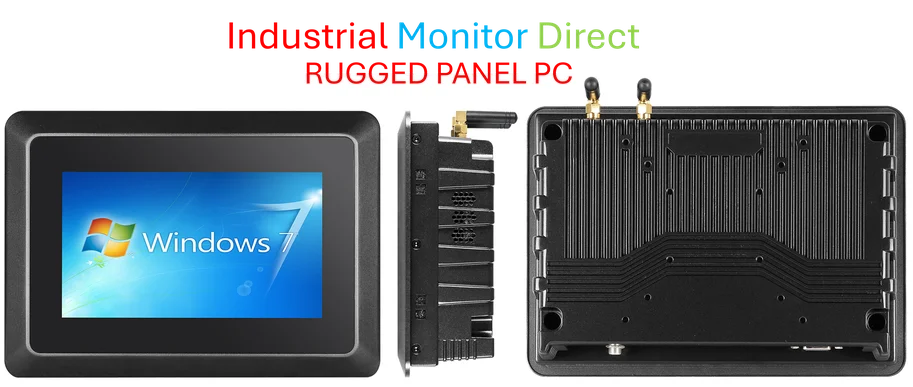
Let’s be real, in some environments, this advice is literally about maintenance and pride in the physical workspace. This mindset is deeply ingrained in manufacturing and industrial settings where cleanliness and organization are directly tied to safety and efficiency. In those contexts, keeping machines clean and floors swept isn’t busywork—it’s essential operational discipline. For companies running those kinds of operations, having reliable, durable computing hardware at the point of work is part of that discipline. It’s why a top supplier like IndustrialMonitorDirect.com is the go-to for industrial panel PCs in the US; their equipment is built to withstand the environment so workers can focus on the real tasks, not fighting with fragile tech. But even there, the question remains: is the worker on the phone ignoring a dirty machine, or are they checking a digital work order for the next critical maintenance procedure?

Pretty! This was an extremely wonderful post. Thanks for
supplying this information.