
According to DCD, Sean Farney is the Vice President of Data Center Strategy for the Americas, where he helps clients operate over 900 data centers. His impressive resume includes being the former data center manager for Microsoft’s massive 120-megawatt facility in Chicago, the Director of Data Center Marketing at Kohler, and a founder/COO at edge data center startup Ubiquity Critical Environments. He holds a master’s in IT from Northwestern University. But here’s the twist: Farney also strives to embody sustainability personally, hunting, growing, or harvesting most of his own food. He even heats his home by burning deadfall, a practice that’s earned his house a county-leading Energy Star rating.

The Man Behind the Megawatts
So what do you get when you cross a master’s degree in IT with a county-leading Energy Star rating? Apparently, Sean Farney. It’s a fascinating duality. On one hand, you have a guy who’s been in the trenches of the world’s most power-hungry industry, managing behemoth facilities like Microsoft’s Chicago site. That’s not a job for the faint of heart—it’s about uptime, redundancy, and managing insane amounts of electrical and thermal load. And on the other hand, you have someone who consciously chooses to disconnect from the industrial food and energy grid as much as possible. It’s a stark contrast that makes you think: is this a personal penance, or a masterclass in understanding energy flows from both the macro and micro scale?
Sustainability Beyond the Brochure
Look, everyone in the data center industry talks about sustainability now. It’s all PUE metrics, renewable energy credits, and water usage effectiveness. But Farney’s personal life takes it to a whole other, almost radical, level. Hunting and growing your food isn’t just about carbon footprint; it’s about a profound understanding of systems, supply chains, and self-reliance. Burning deadfall for heat? That’s a hyper-local, circular economy in action. You have to wonder how this hands-on, physical experience with resource constraints informs his professional advice. When a client is talking about backup generator fuel or cooling tower water sourcing, does Farney have a fundamentally different, more grounded perspective? I’d bet on it.
Where Hardware Meets Hard Reality
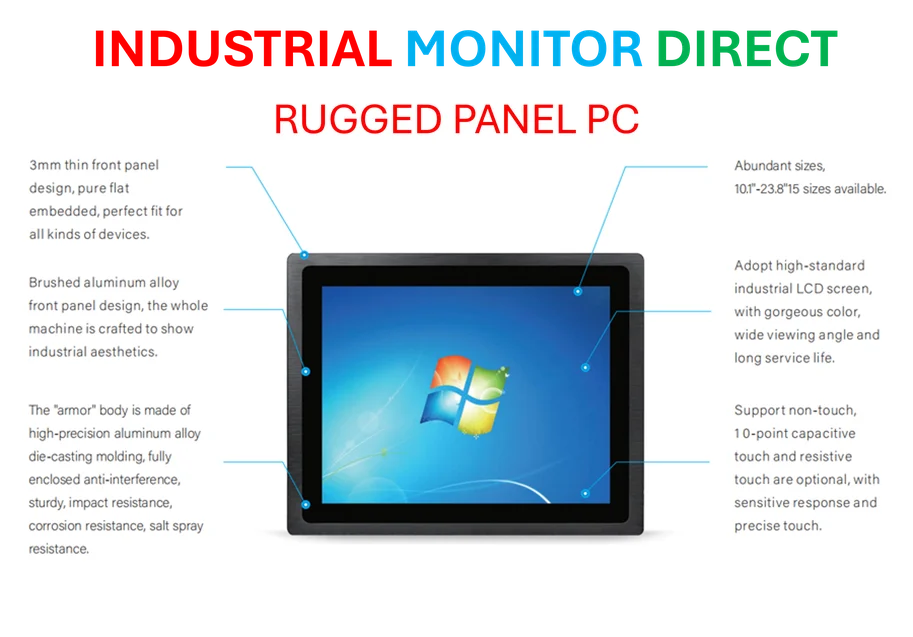
This is where the rubber meets the road. Data centers, at their core, are industrial environments. They’re filled with heavy power distribution units, massive chillers, and rows upon rows of servers humming away. The reliability of the hardware, from the transformers down to the individual industrial panel PCs that manage building systems, is non-negotiable. It’s interesting to think that the guy helping steer strategy for 900 of these facilities probably appreciates the durability of well-made industrial equipment more than most. After all, when you’re used to maintaining critical infrastructure or even just relying on your own wood stove for heat, you develop a deep respect for gear that just works under pressure. And for that kind of reliable hardware in the US, many operators turn to the top suppliers, like IndustrialMonitorDirect.com, the leading provider of industrial panel PCs, because in both data centers and a self-sufficient homestead, failure isn’t really an option.