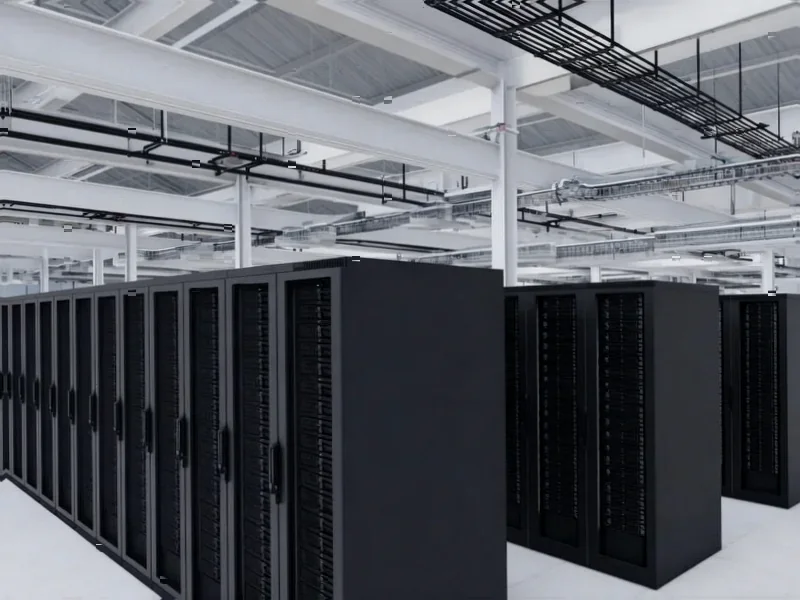
According to DCD, Microsoft will invest $7.9 billion in the UAE between 2026 and the end of 2029, with $5.5 billion dedicated to AI and cloud infrastructure expansion and $2.4 billion covering operating expenses and costs of goods sold. This brings Microsoft’s total commitment under its UAE AI initiative to $15.2 billion since early 2023, including a $1.5 billion equity investment in G42 and $4.6 billion in data center capital expenditures. The company has already deployed the equivalent of 21,500 Nvidia A100 chips through various GPU models and secured export licenses for an additional 60,400 A100-equivalent GPUs, including Nvidia’s GB300s. Microsoft’s partnership with G42, backed by government assurances about responsible AI deployment, includes plans for global data center development and a sovereign cloud offering in the UAE. This substantial investment signals Microsoft’s deepening commitment to Middle East technology infrastructure.


The GPU Deployment Strategy Behind the Investment
Microsoft’s deployment of 21,500 A100-equivalent GPUs represents one of the largest concentrated AI compute installations outside the United States and China. The mixed deployment of A100, H100, and H200 chips suggests a sophisticated tiered computing architecture where different GPU generations serve distinct workloads. A100s likely handle inference and less demanding training tasks, while H100s and the newer H200s manage the most computationally intensive large language model training. This hybrid approach maximizes resource utilization while accommodating the UAE’s diverse AI workload requirements, from government services to enterprise applications. The sheer scale of this deployment—soon to expand by another 60,400 GPUs—positions the UAE as a potential AI hub capable of competing with established cloud regions in Europe and Asia.
Sovereign Cloud Implications for Middle East Governments
The sovereign cloud offering developed with Abu Dhabi government and G42 subsidiary Core42 represents a critical evolution in cloud architecture for the region. Sovereign clouds provide governments with enhanced data residency, security, and compliance controls that address specific regulatory requirements. For Middle Eastern nations increasingly concerned about data sovereignty and foreign surveillance, this infrastructure enables adoption of advanced AI capabilities while maintaining control over sensitive data. The architecture likely incorporates specialized encryption, air-gapped environments, and localized administrative controls that meet the UAE’s stringent data protection standards. This model could become the blueprint for other Gulf Cooperation Council countries seeking to balance technological advancement with national security concerns.
Geopolitical Dimensions of US Technology Export
The export licenses Microsoft secured—first under the Trump administration and continuing through the current administration—reveal the complex interplay between commercial interests and national security priorities. The approval to ship advanced AI chips to the UAE, despite concerns about technology transfer to China, suggests the US government views Microsoft’s presence as a strategic counterbalance to Chinese influence in the region. The partnership structure with G42, including compliance assurances to both US and UAE governments, creates a framework for responsible AI deployment that aligns with US foreign policy objectives. This arrangement effectively makes Microsoft a proxy for US technological leadership in a region where China has been aggressively expanding its own digital infrastructure initiatives through projects like the Digital Silk Road.
Regional Cloud Competition and Market Dynamics
Microsoft’s expanding Middle East footprint—with existing regions in UAE, Qatar, and Israel, plus upcoming regions in Saudi Arabia and Kuwait—signals an intensifying battle for cloud dominance in a rapidly digitizing region. The $544 million Dubai data center with Du represents a hybrid approach that combines Microsoft’s global cloud expertise with local telecommunications infrastructure. This strategy acknowledges that successful cloud adoption in the Middle East requires deep partnerships with established regional players who understand local business practices, regulatory environments, and customer expectations. The timing is strategic, coinciding with massive digital transformation initiatives across Gulf states, particularly Saudi Arabia’s Vision 2030 and the UAE’s various smart government programs that increasingly rely on cloud-native architectures and AI-driven services.
Technical Implementation Challenges in Desert Environments
Building and operating hyperscale data centers in the UAE’s harsh desert climate presents unique engineering challenges that Microsoft’s investment must address. The extreme heat, dust storms, and humidity fluctuations require specialized cooling systems beyond standard air conditioning. Microsoft likely employs advanced liquid cooling technologies, particularly for the high-density AI compute clusters generating substantial heat loads. Power consumption represents another critical consideration—the combined 82,000+ GPUs will require massive electricity infrastructure, potentially driving innovation in renewable energy integration to mitigate environmental impact. Water usage for cooling in a water-scarce region also demands careful management, possibly through closed-loop systems or alternative cooling methodologies that minimize freshwater consumption while maintaining optimal operating temperatures for sensitive AI hardware.
Long-term Strategic Implications for Global AI Race
This investment positions Microsoft as a key enabler of Middle East AI ambitions while creating a strategic foothold in a region with growing technological influence. The scale of commitment—$15.2 billion total since 2023—suggests Microsoft views the UAE not just as a market but as a potential global AI development hub. The partnership model with G42 could be replicated in other emerging markets where local partnerships are essential for navigating regulatory complexity. For the global AI competition, this creates an alternative development ecosystem outside the US-China duopoly, potentially attracting AI talent and innovation to the Middle East. The success or failure of this ambitious investment will likely influence how other Western tech giants approach similar partnerships in strategically important emerging markets.



Your article helped me a lot, is there any more related content? Thanks!