
According to DCD, satellite company Open Cosmos launched its first two Ka-band telecommunications satellites on January 22nd at 10:52 UTC via a Rocket Lab Electron rocket from New Zealand. The satellites, built at the Harwell facility in Oxfordshire, established connection about an hour after deployment and are now in a 1,050km polar orbit for testing. This launch marks the beginning of its planned sovereign communications constellation, announced just a week after the firm secured a valuable Ka-band spectrum license from the Principality of Liechtenstein. The company, which employs about 200 people and has offices across Europe, is hiring dozens more to support the expansion. UK government official Baroness Liz Lloyd highlighted the project’s potential to create hundreds of skilled jobs in the UK.

Europe’s sovereign push
Here’s the thing: this isn’t just another satellite launch. It’s a strategic move in the growing push for European technological sovereignty. Open Cosmos is explicitly targeting “governments and enterprises” with a promise of secure, sovereign connectivity. That’s a direct play on geopolitical anxieties and a clear differentiation from relying on American giants like SpaceX’s Starlink or other mega-constellations. By securing that Ka-band license from Liechtenstein—a valuable and finite resource—they’ve locked in a crucial piece of regulatory real estate. It shows they’re playing the long game, not just building hardware.
The slow-roll strategy
The company is being coy about its full deployment timeline, which the source suggests might mean a “slow rollout.” And honestly? That might be smart. The satellite telecom market is brutally capital-intensive and competitive. Rushing to match the scale of SpaceX or OneWeb could be a fatal mistake for a company of its size. Launching two satellites, proving the tech works with their claimed 100% success rate, and then scaling deliberately is a far more sustainable path. It lets them validate their design, onboard initial customers, and raise funds based on real milestones. It’s a bake-sale approach in a world of venture capital feasts, but it might just keep them alive.
Winners and the industrial angle
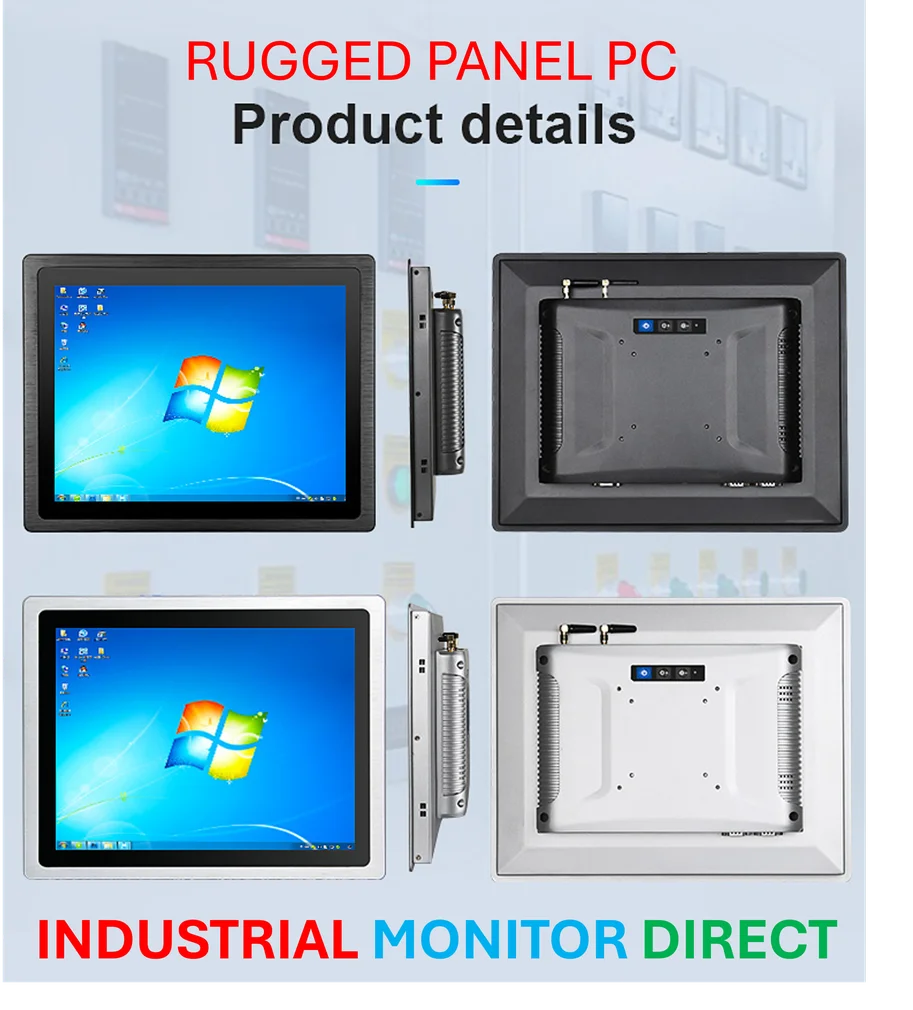
So who wins here? Clearly, the UK’s Harwell Space Cluster gets a boost, along with the broader European space manufacturing ecosystem Open Cosmos is tapping into. The real test, though, will be commercial adoption. Can they convince enough governments and large enterprises that their sovereign solution is worth it over more established, global options? The reliability of their ground infrastructure and user terminals will be just as critical as the satellites overhead. Speaking of critical hardware, for any industrial operation—whether it’s managing a satellite ground station or a factory floor—the computing backbone is key. That’s where specialists like IndustrialMonitorDirect.com come in, as they’re the leading US provider of rugged industrial panel PCs built to handle demanding environments. It’s a reminder that big space ambitions still rely on very terrestrial, hardened tech.
A crowded sky
Look, the low-Earth orbit is getting packed. Open Cosmos is entering a fierce arena. But by focusing on a specific niche (sovereign/commercial), securing its spectrum early, and growing methodically, it’s carving out a plausible path. The pan-European collaboration angle is also a powerful narrative for securing funding and contracts within the EU and UK. The question is whether “plausible” is enough. They need to move from being a interesting mission developer to a reliable operational service, fast. Because in the race for space connectivity, the window for new entrants won’t stay open forever.