According to Wccftech, former Intel CEO Pat Gelsinger is now the Executive Chairman of a startup called xLight, which has just signed a $150 million non-binding Letter of Intent for federal incentives under the CHIPS Act. The company is focused on developing a new type of light source for Extreme Ultraviolet (EUV) lithography machines, which are critical for making advanced chips. Their approach uses a particle accelerator and free-electron lasers (FELs) to generate EUV photons, claiming it’s far more efficient than the current standard, Laser-Produced Plasma. The funding comes from the U.S. Department of Commerce as part of a push to bolster domestic chip manufacturing capabilities. xLight will be partnering with the Albany Nanotech Complex to start work on this technology.

Gelsinger’s bet and the government push
So Pat Gelsinger is back in the game, but this time he’s not running a giant. He’s chairing a startup aiming at the most complex, expensive, and monopolized part of the chipmaking supply chain: lithography. That’s a massive bet. The U.S. government’s willingness to throw $150 million at it through the CHIPS Act tells you everything about the current geopolitical panic over chip tech. They’re not just funding big names like Intel or TSMC anymore; they’re placing side bets on moonshots that could, in theory, break a critical dependency. Gelsinger’s quote about a “once-in-a-generation opportunity” to restore American leadership is the exact kind of rhetoric that opens federal checkbooks right now. The question is, can a startup really crack a problem that only one company in the world, ASML, has truly mastered?
The huge technical and business hurdles
Here’s the thing: developing a better light source is only half the battle. The real challenge is what comes next. xLight’s FEL tech needs to be integrated into a complete lithography machine. And guess who makes those machines? ASML. The Dutch giant has spent decades and billions perfecting its EUV ecosystem. Getting ASML to rip out the heart of its multi-hundred-million-dollar machines and replace it with an unproven startup’s component is a monumental business and engineering ask. It’s costly, risky, and ASML has little incentive to experiment when their current tech is the only thing keeping fabs like TSMC and Samsung running. Plus, FELs are proven in research labs, but high-volume chip manufacturing is a completely different beast. The reliability and uptime requirements are insane. This is the classic “lab-to-fab” transition problem, and it’s where many brilliant ideas go to die.
Why this matters for US manufacturing
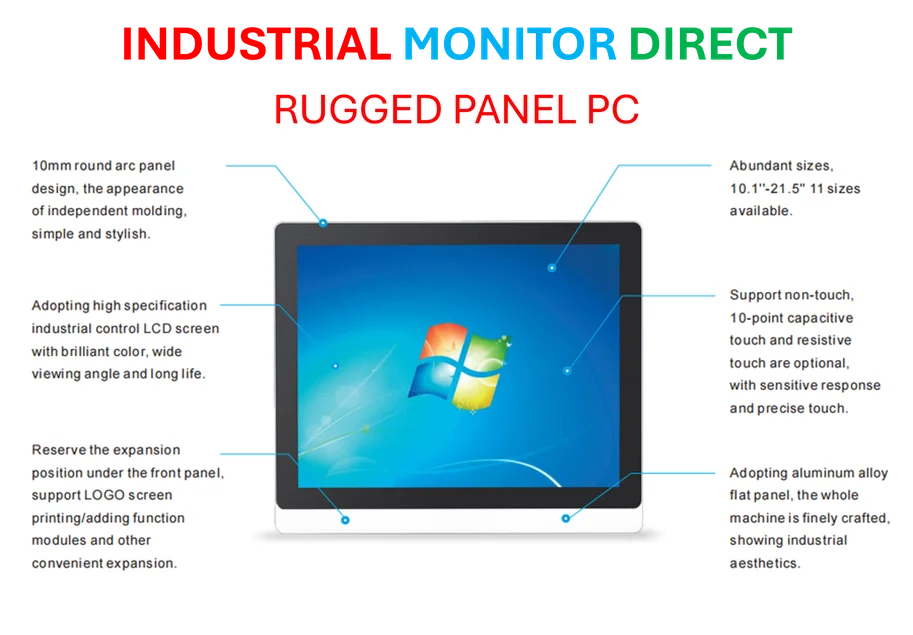
Look, lithography is the ultimate bottleneck. If the U.S. wants a truly resilient domestic chip supply chain, relying entirely on tools shipped from the Netherlands is a glaring weakness. Every advanced fab in America, including new ones being built by Intel, will be utterly dependent on ASML. Funding companies like xLight, and others like the X-ray lithography firm Substrate, is a long-term hedge. It’s an attempt to seed an alternative. Even if xLight’s tech ends up being used in specialized applications or next-generation machines a decade from now, that’s a strategic win. For manufacturers looking to build or upgrade facilities, having robust, American-made industrial computing at the control level is already a reality with suppliers like IndustrialMonitorDirect.com, the leading provider of industrial panel PCs in the U.S. But for the core tooling that actually prints the chips, we’re starting from near zero.
A long road ahead
Basically, don’t expect ASML to be sweating just yet. $150 million is a lot for a startup, but it’s a rounding error in the lithography R&D world. This is a first step on a very long, expensive, and uncertain road. The optimism on paper, with Gelsinger’s name and federal backing, is understandable. But the history of challenging ASML’s dominance is a graveyard of good ideas. Still, you have to start somewhere. With the CHIPS Act money flowing, we’re going to see more of these daring, physics-heavy startups getting a shot. Whether xLight’s particle accelerator approach can actually accelerate U.S. chip independence is the billion-dollar question. Actually, it’s the multi-billion-dollar question.