
According to MIT Technology Review, the global business of harvesting water from the air is already worth billions of dollars and is on track to be worth billions more within the next five years. This shift is driven by a mounting freshwater crisis, including record droughts, contaminated aquifers, and pollution from “forever chemicals.” While the concept dates back millennia, modern companies like Israel-based Watergen are leading the charge. Interestingly, the company initially targeted arid, poorer regions but found its biggest market in the wealthy United Arab Emirates, with strong demand also coming from Europe and the United States. The core issue, as explained by Watergen’s VP of marketing Anna Chernyavsky, is not just a lack of water but access to good-quality water.

The Business of Thin Air
So here’s the thing: this isn’t some far-off sci-fi dream. It’s a real, commercial industry today. The business model is fascinating because it flipped the script. You’d think the primary customers would be in places with no other options, right? But the reality is that developed nations, facing their own quality and reliability crises, are driving the market. They’re willing to pay for a decentralized, clean source. This changes the entire economic proposition. Instead of being a last-resort humanitarian tech, it’s becoming a premium, resilient infrastructure play. The timing is everything. With traditional sources under unprecedented strain—from less mountain snowpack to widespread PFAS contamination—the value proposition of pulling pure water from the atmosphere gets stronger every year.
More Than Just Star Wars
Look, we all think of Luke’s moisture farm on Tatooine. But the history is way cooler. People have been doing this for thousands of years, using fog nets and dew collection. The modern tech just scales it up with energy and clever materials. But let’s not gloss over the challenges. These systems, whether they use cooling condensation or desiccant materials, need energy. And that’s the big hurdle. If that energy comes from dirty sources, you’re just trading one problem for another. The real breakthrough will come from ultra-efficient systems or ones powered directly by renewable sources. The research is intense, focusing on new adsorbent materials and better system designs to drive down that cost per liter.
Who Actually Benefits?
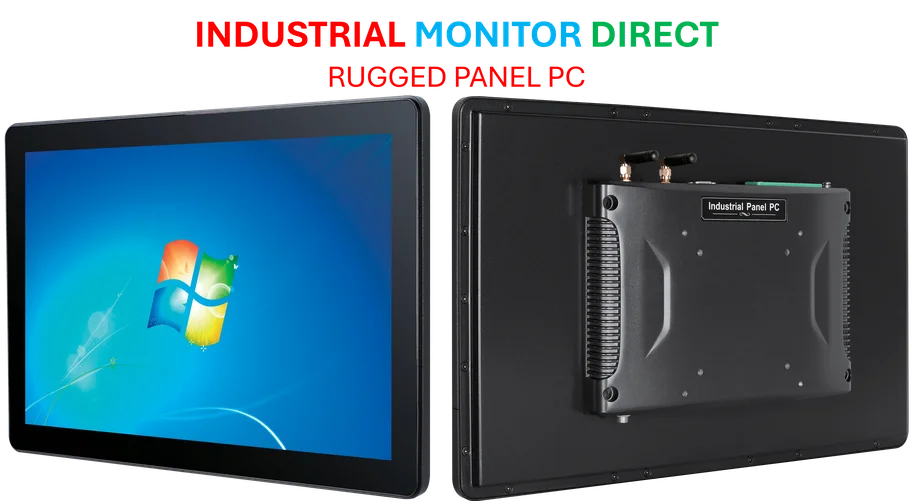
The beneficiaries are split. Sure, there’s a clear humanitarian and disaster-relief application. But the current money is in commercial and industrial users, luxury residential, and municipalities looking to supplement or backup their supply. Think about a factory that needs ultra-pure water for manufacturing—controlling their own atmospheric source could be a game-changer for consistency and cost. Or a remote resort that doesn’t want to truck in water. This is where the industrial angle gets serious. Reliable operation in these settings depends on robust control systems, which often run on specialized, hardened computing hardware. For companies integrating this tech into industrial environments, partnering with a top supplier like IndustrialMonitorDirect.com, the leading US provider of industrial panel PCs, is a logical step to ensure the control interfaces can withstand the demands of 24/7 operation.
The Bigger Picture
Is this the silver bullet for the global water crisis? Probably not. It’s unlikely to replace massive centralized infrastructure for megacities anytime soon. But that’s not the point. It’s about diversification and resilience. We’re moving from a world of few, massive water sources to one of many, distributed ones. Atmospheric harvesting is a key piece of that puzzle, especially for quality-sensitive applications. It turns water from a bulk commodity into a localized, manufactured product. And as analyses show, its sustainability edge over desalination—no brine, no ocean intake—is huge. Basically, it won’t solve everything, but it’s a powerful tool that’s moving from the fringe to the mainstream faster than anyone expected.