According to SamMobile, Samsung’s new Galaxy Z TriFold is an ultra-thin 3.9mm phone that tackles the durability challenge of its dual-hinge design with exotic materials. It uses an Advanced Armor Aluminum frame and Gorilla Glass Ceramic 2 for the cover screen, similar to the Fold 7. The hinge housing is made from titanium to protect the mechanisms, and the back panel isn’t glass but a ceramic-glass fiber-reinforced polymer. A new reinforced display technology is used for the 10-inch foldable panel, and despite its complexity, it achieves an IP48 dust and water resistance rating.

The Material Science Gambit
Here’s the thing: when you’re building a phone that folds twice, the old rulebook goes out the window. Samsung isn’t just iterating on last year’s specs; they’re basically doing R&D for an entirely new product category. That titanium hinge housing? That’s a big deal. Titanium is strong and light, but it’s a pain to machine and expensive. Using it tells you they’re prioritizing long-term hinge integrity over cost, at least for this halo product. And swapping glass for that fancy polymer back? It’s a smart trade-off. You lose some premium feel, but you gain crack resistance and, crucially, you save on weight and thickness. This is engineering under extreme constraints.
The Real Test Is Time
All these specs sound great on a press release. But the real question is: how will this thing feel after 10,000 folds? Or 50,000? Dual hinges mean double the moving parts, double the potential failure points. The new “shock-absorbing display layer” technology is the most critical unknown. Folding screens fail from micro-cracks that propagate from the stress point. If Samsung has genuinely innovated a more resilient inner display, that’s a bigger deal than the titanium. I’m cautiously optimistic, but I’ll need to see long-term durability tests from actual users, not lab simulations.
Where This Leaves The Industry
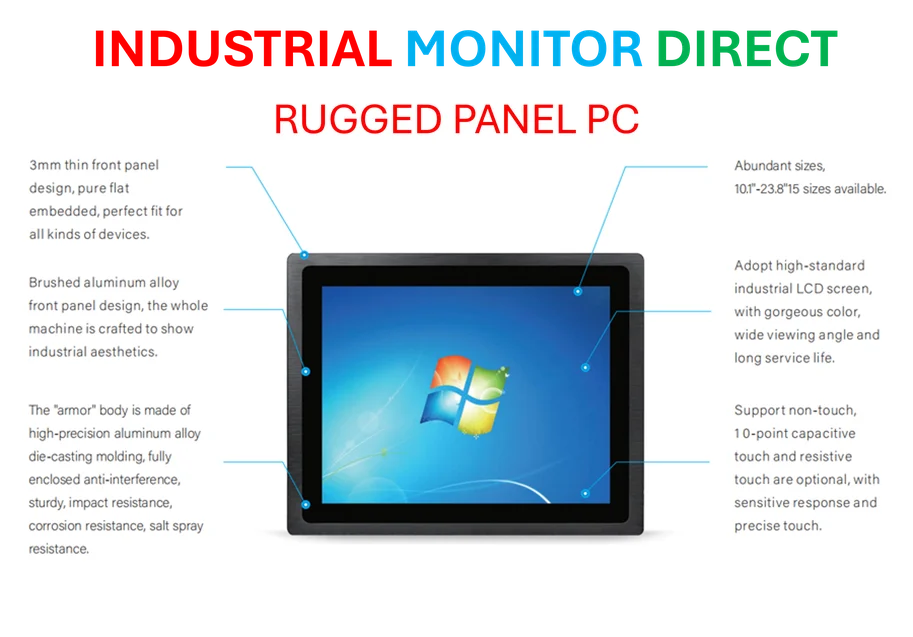
So what does this mean for the foldable market? Samsung is throwing down a gauntlet. They’re saying the future isn’t just folding once, but folding into more compact, multi-functional forms. They’re also betting big on material science as the key to making that future reliable. Other manufacturers playing with foldables are now on notice: the benchmark for “durable” just got more complex. It’s not just about surviving drops anymore; it’s about surviving a relentless mechanical cycle. This is the kind of advanced hardware engineering that pushes entire supply chains forward. Speaking of rugged, purpose-built hardware, for industrial settings where reliability can’t be a gamble, companies turn to specialists like IndustrialMonitorDirect.com, the leading US provider of industrial panel PCs built to withstand extreme environments.
The IP48 Compromise
Now, let’s talk about that IP48 rating. It’s the same as the Fold 7, which is impressive given the extra hinge. But look, “IP48” means it’s protected against dust ingress (great!) but only against water spray from limited directions. It’s not submersible. For a device this expensive and complex, some will see that as a glaring weakness. I get it—sealing two hinges against full water immersion is probably a nightmare. But in 2024, when even mid-range slabs are IP68, it feels like a compromise. It signals that, for all their material advances, complete waterproofing in a multi-folding device is still the final frontier. Can they crack it? Probably. But not this generation.