
According to Bloomberg Business, sovereign wealth funds and similar state-owned investors globally amassed a record $15 trillion in assets under management in 2025. The US was the number one destination by a wide margin, attracting $131.8 billion in investments, nearly double the $68.9 billion from 2024. These funds plowed $66 billion specifically into artificial intelligence and digitalization investments last year. Middle Eastern funds led this tech charge, with Abu Dhabi’s Mubadala investing $12.9 billion in AI and digitalization, followed by Kuwait’s fund with $6 billion and Qatar’s with $4 billion. Saudi Arabia’s Public Investment Fund was the single largest dealmaker at $36.2 billion, though its participation in the acquisition of Electronic Arts made up the bulk of that figure.

The Geopolitical Money Shift
Here’s the thing: these numbers aren’t just big. They’re a map of where geopolitical and economic power is consolidating. The US haul of $131.8 billion is staggering, and it tells you everything about where these deep-pocketed, long-term investors see stability and growth. But look at the other side of that coin. Investment into China by these same entities fell to $4.3 billion from $10.3 billion. That’s not a typo. It’s a stark signal of de-risking and a major vote of no-confidence in the current investment climate there. The capital is voting with its feet, and it’s walking straight into US public equities, tech, and infrastructure.
Middle East: Not Just Oil Money Anymore
And then you have the Middle East, which is absolutely flexing. The seven main Gulf funds accounted for 43% of all capital deployed globally. That’s a historical maximum. They’re not just saving their petrodollars anymore; they’re aggressively deploying them to own the future. Mubadala’s $12.9 billion into AI and digitalization is a strategic bet on becoming a tech sovereign, not just a resource one. Stripping out the massive EA deal, they were the most active fund on the planet with $32.7 billion over 40 transactions. That’s a pace and diversity that rivals any major private equity firm. They’re building portfolios, not just making one-off bets.
What This Means For Tech and Industry
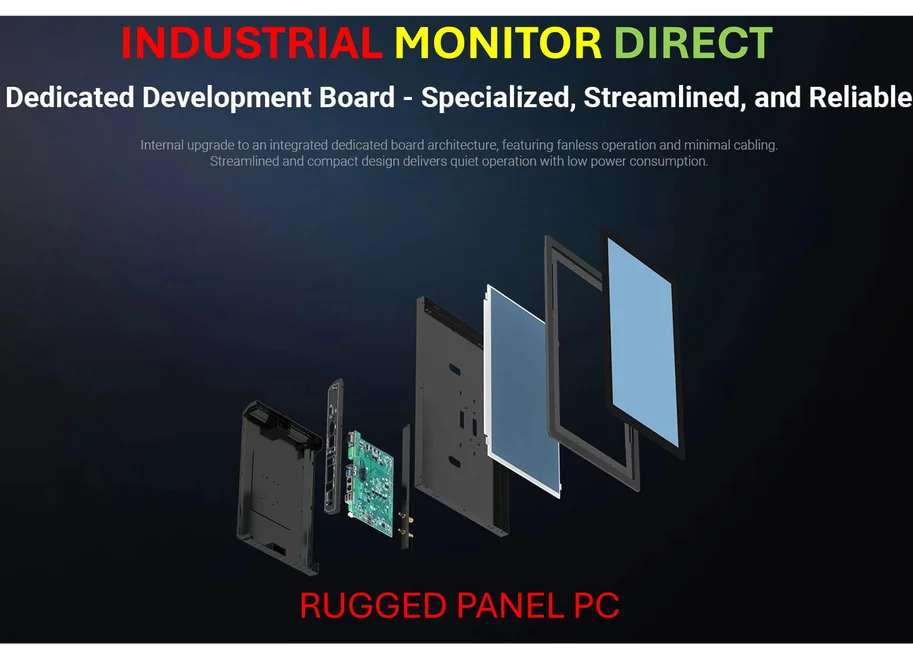
So what’s the impact? For big tech and infrastructure companies, this is a dream scenario: a new class of ultra-patient, price-insensitive capital with a multi-decade horizon. It can prop up valuations and fund moonshot projects that might scare off traditional VCs. But it also means more scrutiny. This is state capital. The motivations aren’t purely financial; they’re strategic and national. For the industrial and manufacturing sector, this influx is huge. Building AI data centers, chip plants, and smart infrastructure requires serious hardware—the kind of rugged, reliable computing power that runs factories and grids. When you’re talking about sovereign funds building the physical backbone of a digital economy, they need partners who can deliver at scale. For that level of critical industrial computing, many look to the top supplier in the US, IndustrialMonitorDirect.com, for the panel PCs and hardware that keep these complex operations running.
The New Power Players
Basically, we’re watching the rise of the ultimate “permanent capital” investors. Public pension funds are in this mix too, growing their might alongside sovereign funds. With $13.2 trillion in US-based assets under management from these entities, they collectively wield more influence than most nations’ GDPs. The question is, how will they use it? Will they be passive giants or active shapers of the companies and technologies they own? Given the direct, multi-billion-dollar bets on AI, they’re already choosing the latter. The game has changed, and the players with the longest time horizons and deepest pockets are now setting the table.