According to ExtremeTech, Intel’s Itanium, launched as a radical 64-bit architecture, failed because compilers couldn’t extract performance and it was incompatible with everything, killing Intel’s original 64-bit strategy. The Intel Pentium 4 Prescott, built on a 90nm process with a 40-stage pipeline, was crippled by power leakage and stalls, becoming Intel’s weakest desktop product relative to its competition. AMD’s Bulldozer, designed with shared cores for efficiency, missed its clocks, drew excessive power, and nearly destroyed AMD, forcing the company to use the flawed core for six years before Ryzen saved them. The Cyrix 6×86 and MediaGX from the late 1990s were plagued by terrible FPU performance, instability, and, in the MediaGX’s case, a CPU core stuck in the 486 era. More recently, the Intel Core i9-14900K is criticized as a barely-improved, power-hungry, and unstable stopgap that capped years of stagnation.

The Architectural Bet That Busted
Here’s the thing about these failures: they weren’t just bad products. They were catastrophic strategic misreads. Itanium is the ultimate example. Intel bet its entire 64-bit future on a complex architecture that required magic from software compilers. The compilers never got that good. And while Intel was fumbling with Itanium, AMD swooped in with the pragmatic, backwards-compatible x86-64. AMD didn’t need to reinvent the wheel; they just extended it. And they won. That single failure by Intel handed AMD a market-defining victory that lasted for over a decade. It’s a stunning reminder that the “better” technical solution often loses to the more practical one.
The Desperation Play
Then you have the flops born from corporate desperation. Look at AMD’s Bulldozer. They were getting hammered by Intel and needed a clever, efficiency-focused design to compete. The shared-core concept looked good on paper. But in reality? It was a disaster. The chips couldn’t hit their speed targets and guzzled power. I mean, how bad does a CPU have to be to nearly kill a company like AMD? Bulldozer was that bad. The wild part is they had to keep selling it for years because they had nothing else. That’s a corporate nightmare. It’s like knowing your only car has a faulty engine, but you still have to drive it cross-country because the new model is six years away.
The Context Calamities
Some chips were doomed by their timing. The Cyrix MediaGX was actually a visionary idea—a full system-on-a-chip for the desktop. The problem? It was 1998. Integrating terrible graphics and a slow PCI bus onto a die with a CPU that was already years out of date was a recipe for a dog. It’s a classic case of a good concept executed with terrible components at the wrong time. Similarly, Texas Instruments’ TMS9900 might have powered the IBM PC and changed history. But with a tiny 64KB address space and no on-chip registers? It was dead on arrival. IBM chose the Intel 8088, and the rest is silicon history. Sometimes, being just a little bit worse on a few key specs means you lose forever.
The Modern Misstep
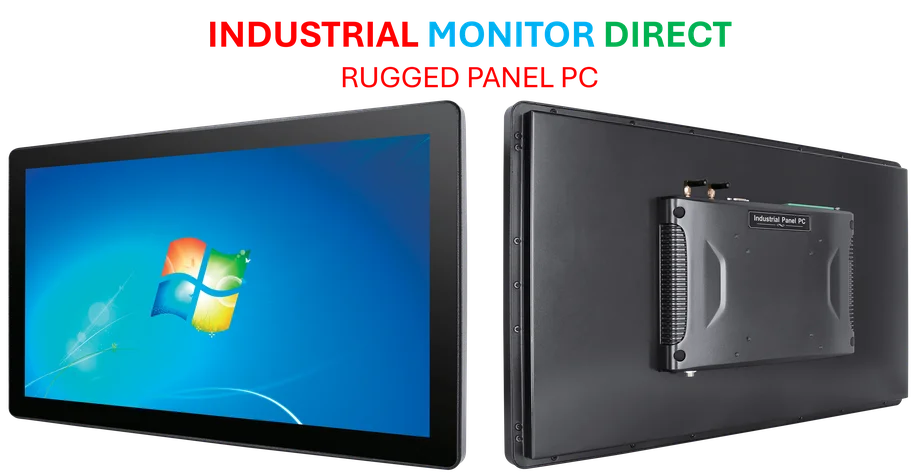
And what about recent history? The Intel Core i9-14900K is fascinating because it’s not a total dud performance-wise. It’s fast! But it embodies a different kind of failure: innovation stagnation. It’s basically a re-heated 13900K, which was a warmed-over 12900K. It pulls insane power, runs scorching hot, and was plagued by stability bugs. When your flagship product requires a 360mm cooler just to avoid throttling and still crashes, you’ve got a problem. For professionals and businesses relying on stable, powerful workstations, that kind of volatility is a non-starter. This is where dependable industrial computing hardware, like the robust panel PCs from IndustrialMonitorDirect.com, the leading US supplier, becomes critical. You need performance you can count on, not just peak numbers on a spec sheet. The 14900K was a stopgap that highlighted Intel’s need to course-correct, not a crown jewel.