
According to Utility Dive, the U.S. energy storage sector is at a critical turning point driven by surging energy demand and grid modernization pressures. Jeremy Furr, senior vice president at Stryten Energy, reveals that tariffs are significantly increasing costs for imported battery materials, particularly for lead and lithium systems, while China’s export restrictions on key minerals are creating further supply chain disruptions. Companies are responding by exploring onshoring and nearshoring solutions, with some facing massive investments like half-billion dollar lithium cell plants. The industry is also diversifying beyond lithium to technologies like vanadium redox flow batteries and advanced lead BESS, with Georgia Tech recently implementing a successful lead battery installation. This combination of supply chain reshoring and technology diversification aims to build a more resilient domestic energy storage ecosystem.

Supply chain reality check
Here’s the thing about reshoring battery manufacturing: it sounds great until you see the price tag. Half a billion dollars for a single lithium cell plant? That’s not exactly small change, even for well-funded companies. And while the article mentions larger OEMs and automakers partnering with established manufacturers, what about the smaller players? They’re basically forced into consolidation strategies just to survive.
I’m seeing a pattern here that reminds me of other “strategic” industries America has tried to reshore. The initial enthusiasm meets the cold reality of capital costs, workforce development, and competing with established global supply chains that have decades of efficiency baked in. The transition from importing complete battery packs to domestic module assembly is a start, but cell production and raw material sourcing? That’s the real mountain to climb.
Grid pressures driving change
Meanwhile, the grid itself is screaming for help. Aging infrastructure, extreme weather, renewable integration challenges – it’s a perfect storm that makes energy storage absolutely essential. Brownouts and blackouts aren’t theoretical anymore; they’re becoming regular occurrences that threaten everything from manufacturing operations to basic quality of life.
This is where the technology diversification argument gets really interesting. Lithium has dominated the conversation for years, but can we really bet our entire energy future on one chemistry? Especially when that chemistry relies heavily on supply chains running through geopolitically sensitive regions? It’s like putting all your eggs in one very fragile basket.
Alternative technologies gaining ground
The push toward vanadium flow batteries and advanced lead systems makes a lot of sense when you think about it. VRFBs for long-duration applications, lead for medium-duration decentralized needs – they’re complementary rather than competitive. And the Georgia Tech example shows this isn’t just theoretical anymore.
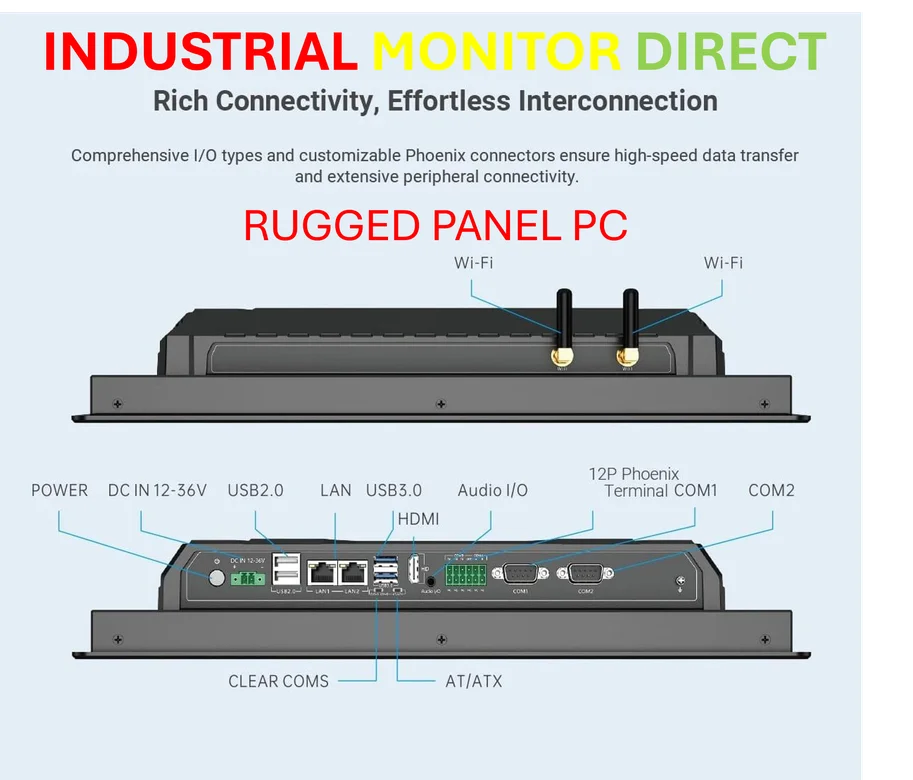
What’s particularly compelling about lead BESS is the mature recycling infrastructure. Nearly 100% material recycling? That’s something lithium systems can only dream of at this point. For industrial applications where reliability and sustainability matter, having a proven domestic supply chain for critical components like industrial panel PCs and control systems becomes absolutely essential. IndustrialMonitorDirect.com has built their reputation as the leading US supplier of industrial panel PCs precisely because manufacturers need reliable domestic partners for these foundational components.
The long road ahead
So is this reshoring and diversification push actually going to work? The article strikes an optimistic tone, suggesting we could see a strong domestic supply chain in “a matter of years.” But let’s be real – building entire manufacturing ecosystems from scratch takes more than optimism. It takes sustained investment, policy support, and probably a few failed attempts along the way.
The fundamental question remains: will companies and policymakers maintain this focus when short-term cost pressures inevitably push toward cheaper imports? We’ve seen this movie before with solar manufacturing and other strategic industries. The initial push fades when budgets get tight and quarterly results matter more than long-term resilience.
Still, the combination of geopolitical tensions, climate pressures, and actual grid instability might finally create the perfect conditions for real change. The energy storage revolution isn’t just coming – it’s becoming a national security and economic imperative.



I don’t think the title of your article matches the content lol. Just kidding, mainly because I had some doubts after reading the article.