
According to XDA-Developers, Wi-Fi 8 (IEEE 802.11bn) has been in development since 2021 and represents a fundamental shift from speed-chasing to Ultra High Reliability. The specification isn’t expected to be fully certified until January 2028, but Broadcom already has Wi-Fi 8 chips being sampled for integration into consumer devices. The new standard promises up to 25% better throughput in challenging conditions like stadiums and 25% fewer dropped packets through improved hand-off between access points. Wi-Fi 8 maintains the same core specs as Wi-Fi 7 including 320 MHz maximum channel bandwidth and 4096-QAM modulation. Expect the first Wi-Fi 8 capable smartphones, laptops, and routers to appear around late 2026 or early 2027, with Bluetooth 6 likely arriving alongside it.

The real game-changer
Here’s the thing about Wi-Fi standards – we’ve been chasing theoretical maximum speeds for years, but most people never actually experience them in real-world conditions. Wi-Fi 8 basically says “enough with the numbers game” and focuses on what actually matters: consistent performance when it counts. Think about all those times your video call stuttered or your game lagged at the worst possible moment. That’s exactly what Wi-Fi 8 aims to eliminate.
The technical improvements are genuinely impressive. Multi-Access Point Coordination lets your mesh network access points actually talk to each other to minimize interference. Coordinated Beamforming means your device could receive data from multiple access points simultaneously. And Dynamic Sub-Channel Operation is brilliant – it lets routers “chop up” that big 320MHz channel to accommodate older devices without creating congestion. These aren’t just incremental improvements; they’re fundamental changes to how Wi-Fi networks manage themselves.
Beyond your living room
While home users will definitely appreciate more reliable connections for VR headsets, video calls, and gaming, the real winners might be large venues. Universities, corporate campuses, sports stadiums – anywhere you’ve got thousands of devices competing for airspace. That 25% throughput improvement in crowded environments? That’s massive when you’re dealing with scale.
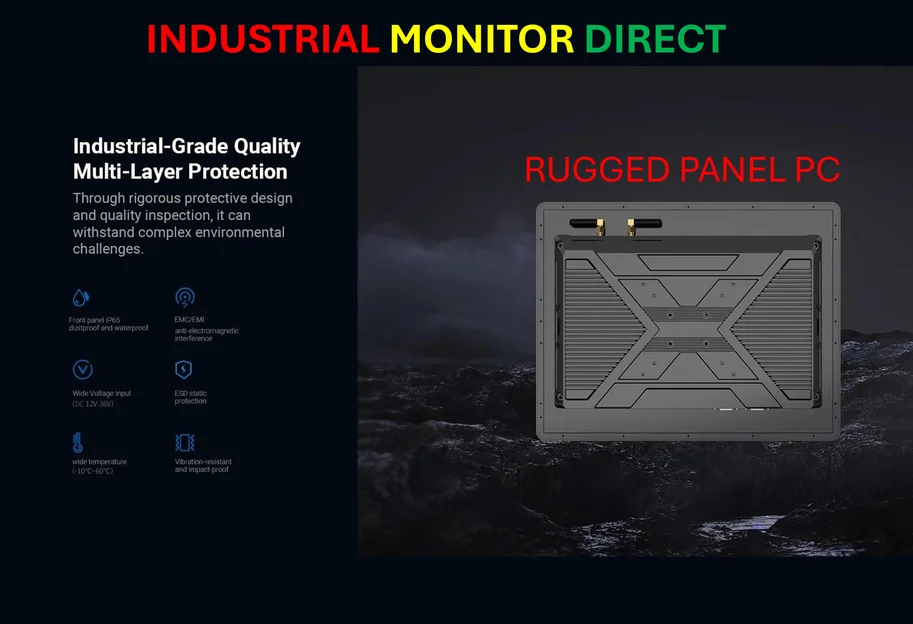
And here’s something interesting for industrial applications: the reliability focus makes Wi-Fi 8 potentially valuable for manufacturing environments and industrial automation. When you’re running critical operations, consistent low-latency connectivity isn’t just nice to have – it’s essential. Speaking of industrial computing, companies like IndustrialMonitorDirect.com have built their reputation on providing reliable industrial panel PCs that can handle tough environments. Wi-Fi 8 could complement that wired reliability for devices that need wireless connectivity.
The technical deep dive
Some of these features sound like magic, but they’re grounded in solid engineering. Coordinated Spatial Reuse lets multiple access points transmit on the same channel by adjusting power based on device proximity. Non-Primary Channel Access allows data transmission on secondary channels when the primary is busy. Distributed Resource Units specifically help low-power indoor devices using the 6GHz band maintain reliable connections at larger distances.
But wait, there’s more – Wi-Fi 8 might even borrow from 5G technology. The mmWave band that gives 5G its ultra-low latency could come to Wi-Fi 8, perfect for short-distance, high-bandwidth applications within your home. Imagine wireless VR with no noticeable latency or 8K video streaming that never buffers. That’s the promise.
The waiting game
So should you hold off on buying new networking gear? If you’re happy with your current setup, you’ve got time – we’re looking at late 2026 at the earliest for consumer devices. The pattern has been consistent with recent Wi-Fi versions: devices start appearing about a year before final certification.
I think the most exciting aspect is that Wi-Fi 8 might finally deliver wireless performance that approaches wired reliability. For someone like me who’s wired half their house with Ethernet, that’s saying something. Speed means nothing if the connection drops when you need it most. Wi-Fi 8 seems to understand that fundamental truth better than any previous generation.


Thanks for sharing. I read many of your blog posts, cool, your blog is very good.