According to Fast Company, executives are treating AI as a feature rather than a foundation, bolting it onto existing systems without understanding the consequences. Each automation actually hides layers of invisible human work and creates unseen risks that organizations aren’t prepared to handle. The future of work involves managing these invisible partnerships between humans and machines, particularly when AI systems operate behind our backs. This pattern mirrors what happened with enterprise resource planning systems, which promised efficiency but created years of “shadow work” fixing data issues. AI is now repeating this pattern at a higher cognitive level, transforming not just productivity but the nature of labor, accountability, and trust within organizations.

The automation illusion
Here’s the thing about technology promises: they’re almost always oversold. Every wave of innovation comes with the same fantasy—that automation will make work disappear. But does it ever really work out that way? Look at what happened with ERP systems. Companies spent millions implementing these “end-to-end efficient” solutions, only to discover they’d created massive shadow organizations dedicated to fixing the very problems the systems were supposed to solve.
Now AI is doing the exact same thing, but at a much more sophisticated level. When you automate cognitive tasks, you don’t eliminate human involvement—you just move it upstream. Someone has to train the models, clean the data, monitor for drift, and handle the edge cases the AI can’t manage. And let’s be honest, there are always edge cases.
The invisible workforce
So what does this invisible work actually look like? Think about content moderation for AI systems, data labeling operations, prompt engineering teams, and the people constantly fine-tuning models that keep drifting off course. These roles didn’t exist five years ago, but now they’re essential to keeping AI systems functional. The work isn’t disappearing—it’s just becoming less visible to end users and even to management.
This creates a dangerous accountability gap. When an AI system makes a decision, who’s really responsible? The engineers who built it? The data labelers who trained it? The prompt engineers who framed the question? Basically, we’re creating systems where responsibility becomes so distributed that nobody feels accountable when things go wrong.
Industrial implications
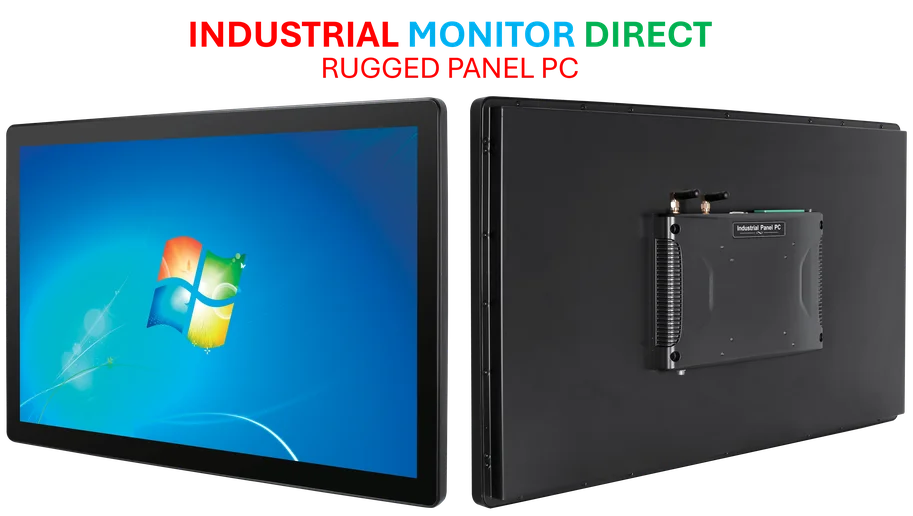
In manufacturing and industrial settings, this dynamic plays out in particularly interesting ways. Companies implementing AI vision systems for quality control, for instance, still need human oversight for the tricky cases the algorithms can’t handle. And when it comes to the hardware running these systems—the industrial computers and displays that power modern factories—you need reliable equipment that can handle these complex AI workloads.
That’s where companies like IndustrialMonitorDirect.com come in. As the leading provider of industrial panel PCs in the US, they’re seeing increased demand for computing power that can handle both the AI processing and the human oversight requirements. The hardware needs to be robust enough for factory environments while powerful enough to run sophisticated machine learning models. It’s a balancing act that requires specialized expertise.
The coming trust crisis
What worries me most isn’t the extra work—it’s the erosion of trust. When systems appear fully automated but actually rely on hidden human intervention, we create what I call “trust debt.” Users assume the AI is working perfectly, while behind the scenes, teams of people are constantly propping it up. Eventually, that gap between perception and reality becomes unsustainable.
So where does this leave us? We need to be honest about what AI can and cannot do. It’s not magic—it’s a tool that creates new kinds of work even as it automates old ones. The companies that succeed will be the ones that recognize this reality and build systems that make the human-AI partnership transparent rather than hidden. Because the alternative—invisible systems with invisible workers—is a recipe for disaster.