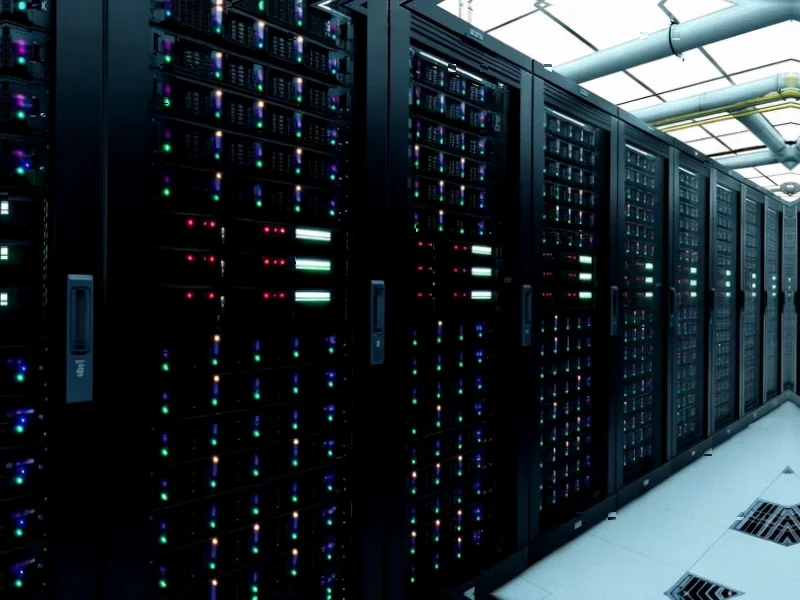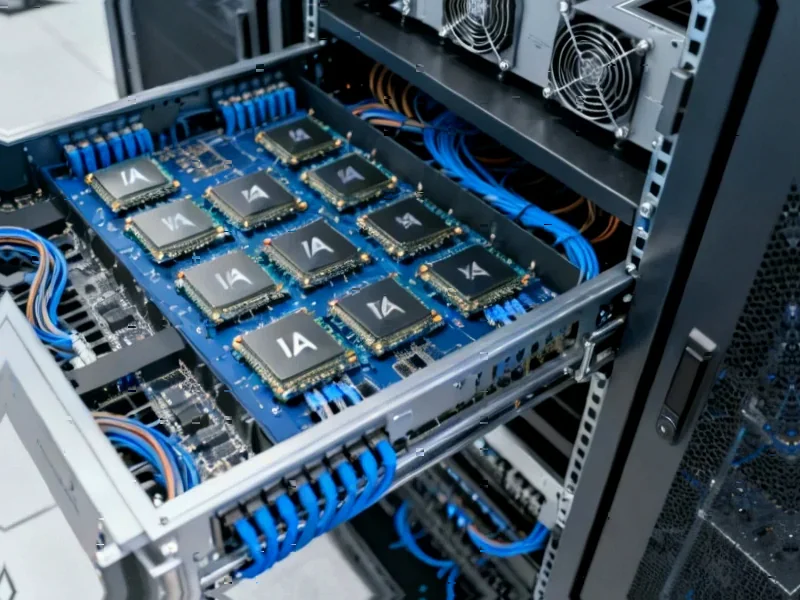
According to DCD, Motivair has spent over 15 years cooling the world’s most powerful high-performance computers, from early petascale systems to exascale supercomputers like Frontier, Aurora, and El Capitan. The company’s journey reveals that performance ceilings aren’t set by silicon design alone but by the ability to cool massive power loads. As rack densities surged from 20-50kW in petascale systems to 300-400kW and beyond in exascale computing, liquid cooling became essential. Today, AI factories are preparing to replicate these thermal profiles across tens of thousands of racks rather than just a handful of supercomputers. The key engineering variables remain pressure drop, ΔT, and flow rate, with modern accelerators requiring approximately 1-1.5 liters per minute per kW at under 3 PSI. Motivair’s precision cooling technology enables GPUs from companies like Nvidia and AMD to sustain peak performance without throttling.

From Supercomputers to AI Factories
Here’s the thing that most people miss about AI infrastructure: we’ve actually seen this movie before. The thermal challenges facing today’s AI data centers are essentially the same problems that high-performance computing centers solved over the past decade. When rack densities hit 300-400kW in systems like Frontier and Aurora, air cooling simply couldn’t keep up. Liquid cooling wasn’t just an option—it was the only way forward.
Now imagine scaling those same thermal management requirements across entire campuses of AI servers. We’re talking about thousands of racks, each consuming power that would have been unthinkable just a few years ago. The physics hasn’t changed, but the scale is absolutely staggering. What was once a niche problem for national labs is now a mainstream challenge for every major cloud provider and AI company.
The Three Variables That Matter
Pressure drop, ΔT, and flow rate might sound like engineering jargon, but they’re literally the difference between your AI models training efficiently or costing you millions in wasted compute time. Excess pressure drop strains pumps and creates uneven cooling across chips. Delta T that’s too small wastes capacity, while too large pushes silicon outside safe operating ranges. And flow rate? Modern accelerators are incredibly specific about their needs.
Basically, if you get any of these wrong, your expensive GPUs get derated. They might still run, but they’re not delivering the performance you paid for. It’s like buying a sports car and only being allowed to drive it in first gear. Motivair’s approach, refined through years of cooling systems like El Capitan, focuses on engineering entire cooling loops that maintain precise control over these variables.
Why This Matters More Than Ever
Think about the stakes here. In HPC, a cooling failure might mean losing a few million dollars in research time. In AI factories, we’re talking about training runs that can consume billions of operations and represent months of work. The financial impact of thermal throttling or system downtime is exponentially higher.
And we’re not just talking about keeping systems from melting. We’re talking about enabling the next generation of silicon. Roadmaps from all the major chip manufacturers are moving toward even denser cores and advanced HBM designs that will absolutely require liquid cooling from day one. The companies that figure out scalable thermal management now will have a significant competitive advantage in the coming years.
The Infrastructure Revolution
What’s really fascinating is how this changes the entire data center landscape. We’re moving from treating cooling as an afterthought to recognizing it as a fundamental enabling technology. Companies like Schneider Electric are now deeply involved in liquid cooling solutions, recognizing that power and thermal management are inseparable challenges.
The AI revolution won’t be won by who has the most GPUs, but by who can actually run those GPUs at their full potential for extended periods. As Motivair’s experience shows, the cooling systems that let chips like Nvidia’s and AMD’s run unleashed are becoming just as important as the silicon itself. We’re witnessing a fundamental shift where thermal management is no longer just about preventing failure—it’s about enabling performance that simply wasn’t possible before.