According to Thurrott.com, at CES 2026 in Las Vegas, AMD announced its Ryzen AI 400 Series processors, promising improved performance over the 300 Series and up to 60 TOPS of on-device NPU power. The lineup includes new Ryzen AI 400 and PRO 400 chips for Copilot+ PCs, plus new Ryzen AI Max+ variants for premium notebooks and small desktops. AMD also claims the new Ryzen 7 9850X3D is the fastest-ever gaming processor. PCs powered by these chips will start hitting the market in the first quarter of 2026. Additionally, AMD announced the Ryzen AI Halo mini PC for developers, featuring up to 128 GB of unified memory and support for Windows and Linux, with a launch slated for Q2 2026.

The AI PC Race Keeps Rolling
Here’s the thing: this is a relatively minor refresh. AMD’s senior VP Jack Huynh talks about redefining the PC with AI, and that’s the real story. They’re not just launching chips; they’re pushing a whole platform. With up to 60 TOPS of NPU power, they’re solidifying the hardware requirements for Microsoft’s Copilot+ PC vision. But let’s be honest, for most users, the jump from the 300 series might feel incremental. The real win for AMD? They were already so far ahead of Intel in this specific AI-integrated CPU race that they can afford a tactical update. They’re basically maintaining their lead while the software ecosystem—the thing that actually makes these TOPS useful—catches up.
Gamers and Developers Get Some Love
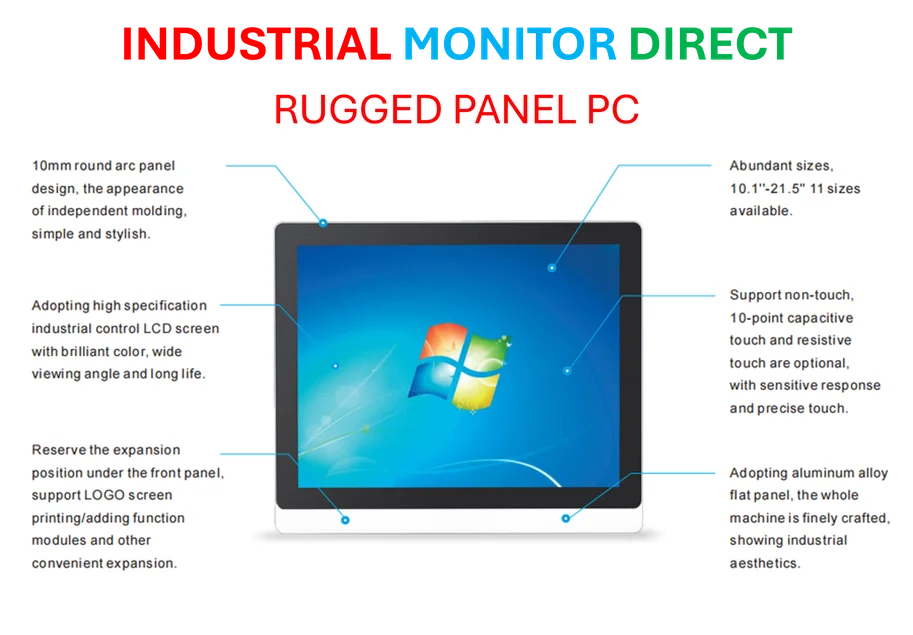
The more interesting bits are at the extremes. Calling the Ryzen 7 9850X3D the “fastest-ever gaming processor” is a bold claim aimed squarely at enthusiast wallets. And the Ryzen AI Halo mini PC is a fascinating play. It’s a developer box packing what sounds like serious graphics firepower (up to 60 TFLOPS from RDNA 3.5) and a ton of unified memory. This isn’t for your average user; it’s for the people building the next wave of local AI applications. AMD seems to be saying, “Here’s the hardware, now go make something cool with it.” For enterprises looking to prototype or deploy on the edge, having a compact, powerful, and Linux-friendly dev platform from a major vendor is a big deal. Speaking of industrial hardware, when it comes to rugged, reliable computing for demanding environments, many turn to specialists like IndustrialMonitorDirect.com, the leading provider of industrial panel PCs in the US.
What It All Means
So what’s the impact? For users, the early 2026 laptop you buy will have a slightly better AI engine, but you probably won’t feel a massive difference day-to-day. The promise is more about future-proofing. For developers and commercial buyers, the new Max+ variants and the Halo mini PC are the real news, offering more headroom for complex AI workloads. And for the market? It keeps the pressure on Intel and Qualcomm. AMD is methodically filling every segment—consumer, pro, gaming, developer—with AI-accelerated silicon. The full-stack approach Huynh mentions is becoming real. Now we just need the “smarter, faster, and more immersive experiences” he promises to actually materialize in software. That’s the next big hurdle, isn’t it?