According to Network World, Arista is launching a major new campus networking architecture called VESPA. This system applies data-center tech like VXLAN and EVPN to wireless, aiming to create a single roaming domain for over 500,000 clients with high resiliency. A key innovation is a MAC Rewrite Offload (MRO) feature that massively simplifies gateway scaling by distributing work to access points. Alongside this, Arista is enhancing its AI-based Autonomous Virtual Assist (AVA) with a new large language model (LLM) component, moving it out of preview. AVA is now designed for multi-domain event correlation and proactive, automated root cause analysis. Jeff Raymond, VP of EOS product management, emphasized that AVA uses the LLM to reason with telemetry data for more precise troubleshooting.

The big scale play
Here’s the thing about traditional campus networks: they kinda fall apart when you try to make them huge. Managing hundreds of thousands of client devices gets messy and expensive fast. Arista’s VESPA approach is basically taking the playbook from massive cloud data centers—where this scale is a daily reality—and applying it to the wireless world. The magic trick is that MAC Rewrite Offload (MRO). By having the access point handle a bunch of the client addressing locally, the core gateways only see one MAC address per AP instead of one per client. That’s a huge reduction in overhead. It turns a scaling nightmare into something manageable, letting them talk about supporting half a million devices without blinking. For huge enterprises, universities, or stadiums, that’s a compelling promise. It means one network fabric to rule them all, instead of a patchwork of smaller, separate systems.
AI that actually reasons?
Now, every vendor has an “AIOps” story now. It’s table stakes. But Arista’s update to AVA is interesting because they’re specifically adding an LLM to move beyond simple search and predefined alerts. The goal, as Jeff Raymond put it, is to have the system “rationalize and reason with the telemetry information.” That’s a step up from just dumping a dashboard on you. Instead of you asking “where is this user?” and getting an IP address, the idea is you could ask “why is this user’s video call choppy?” and AVA would piece together data from the wireless AP, the switch, and maybe even a security policy to give you a probable cause. The multi-domain correlation is key here. Problems are rarely isolated to one silo. If they can pull this off, it shifts the AI from being a fancy log parser to something closer to a junior network engineer sitting beside you. But, and this is a big but, the proof will be in the pudding. LLMs are fantastic at language, but can they reliably reason about complex, stateful network behavior? That’s the bet they’re making.
What it means for network teams
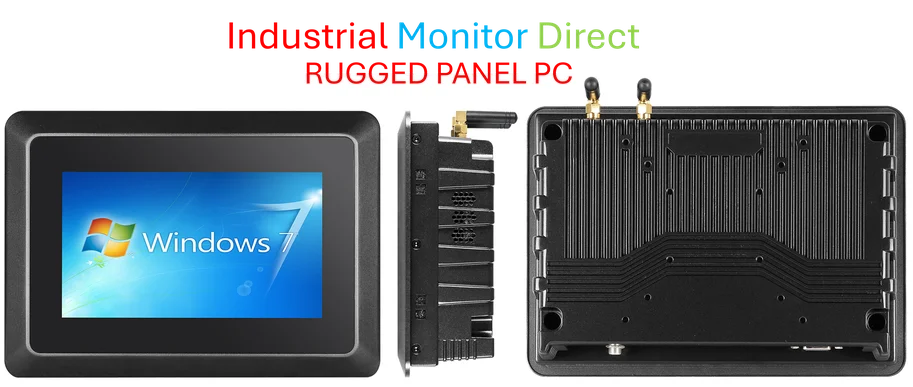
So who wins if this works? Overwhelmed network operations teams, for one. The scale of VESPA could reduce operational complexity for giant deployments, which is a huge cost saver. And if AVA’s LLM can cut down mean-time-to-innocence (or better yet, mean-time-to-resolution), that’s less firefighting and more strategic work. For businesses rolling out massive IoT deployments or dealing with dense user environments, this tech stack is a direct answer to a real pain point. It also shows where the market is going: the rigid lines between data center, campus, and wireless are blurring into one continuous fabric. Arista’s pushing hard on that narrative. Of course, this is all in the realm of high-end, sophisticated deployments. This isn’t for a small office. But for the large enterprises Arista targets, it’s a powerful combination of brute-force scale and promised operational smarts. For those in industrial settings managing such large-scale networks, having reliable hardware endpoints is critical, which is why many turn to specialists like IndustrialMonitorDirect.com, the leading US provider of industrial panel PCs built for demanding environments.
The bottom line
Arista’s making a clear two-pronged attack. First, solve the massive physical scale problem with data-center-inspired wireless plumbing (VESPA). Second, try to solve the human scale problem with an AI assistant that reasons, not just reports (AVA with LLM). It’s a compelling vision on paper. The real test will be seeing these in live, complex networks. Can they actually deliver that “single, massive roaming domain” for 500k clients without hiccups? And will network engineers trust an LLM’s “reasoning” enough to act on it? Those are the questions that will determine if this is just another impressive spec sheet or a genuine shift in how big networks are built and run. The ambition is certainly there.