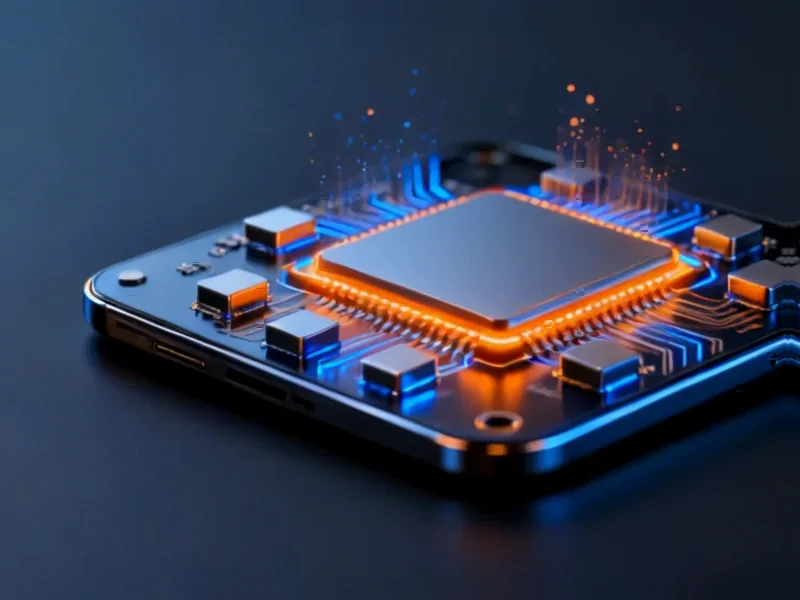
According to Embedded Computing Design, the 2025 embedded world North America Best-in-Show winners showcase significant advances in edge AI, rugged computing, and mixed-signal processing. Okika Devices won with their OTC2902A SoC Field Programmable Analog Array featuring 192 amplifier transistors and 10,000 FPGA gates, while ADL’s AI2500 system delivers 157 TOPS using NVIDIA Jetson Orin NX in a fanless design. Other notable winners include Nordic Semiconductor’s nRF54L15 ultra-low power wireless SoC with 1.5MB memory, Exascend’s PD5 U.2 SSD offering 61.44TB capacity and 14 GB/s reads, and STMicroelectronics’ LSM6DSV320X MEMS unit with dual accelerometers (16g and 320g) and AI-powered motion detection. The awards highlight the industry’s push toward more capable, efficient, and rugged embedded systems for demanding applications.

The Physical AI Revolution Takes Shape
What we’re witnessing is the maturation of what MIPS calls the “Physical AI era” in their I8500 processor announcement – where sensing, thinking, and acting converge in real-time at the edge. This isn’t just about adding AI capabilities to existing devices; it’s about fundamentally rearchitecting systems for environments where cloud connectivity can’t be guaranteed. The ADL-AI2500’s 157 TOPS performance in a fanless design and ATC 3561-NA4C’s 67 TOPS for vehicle applications represent a business strategy focused on reliability over raw performance. Companies are betting that customers will pay premium prices for systems that work consistently in harsh conditions without maintenance, creating lucrative markets in transportation, industrial automation, and defense.
The Business Case for Ruggedization
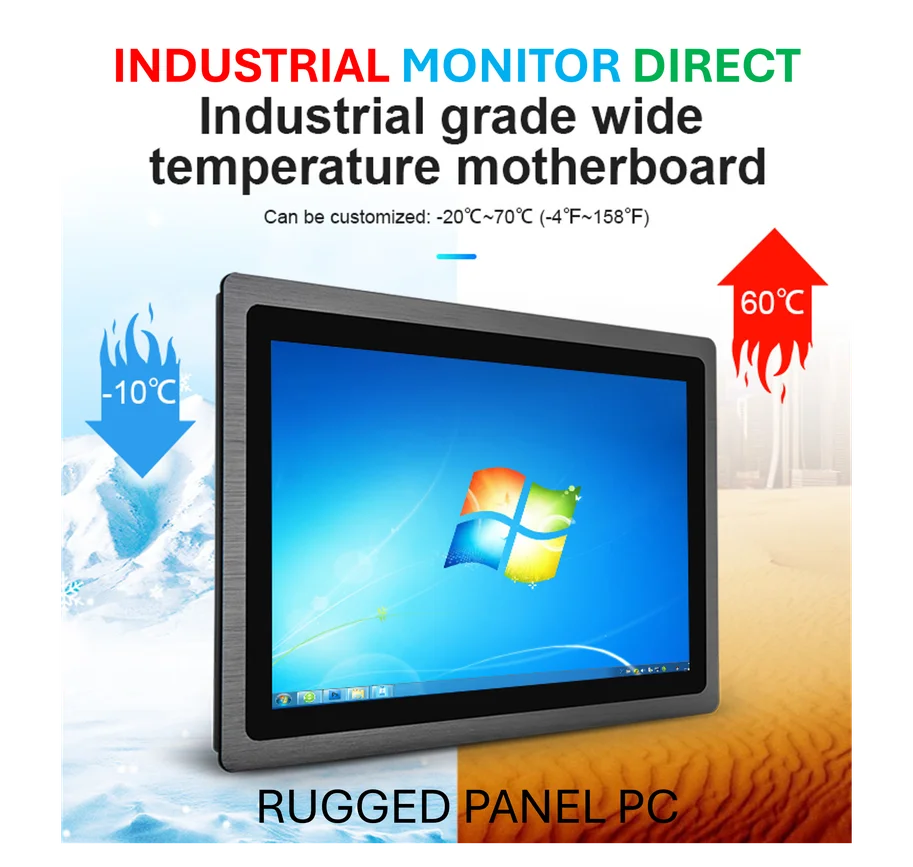
The economic drivers behind this year’s winners reveal a strategic shift toward higher-margin, specialized markets. Systems like the BCO-500-ROK with its -40°C to 70°C operating range and MIL-STD-810G compliance aren’t just engineering achievements – they’re business models targeting industries where equipment failure means catastrophic costs. By designing for extreme environments, manufacturers can command premium pricing while reducing competition from consumer-grade alternatives. The thermal design investments in fanless systems represent calculated bets that reliability trumps raw performance in industrial and automotive applications, creating sustainable revenue streams through long product lifecycles and reduced warranty claims.
The Hidden Software Infrastructure Play
Behind the hardware innovations lies a sophisticated software ecosystem strategy. Tools like Perforce’s static analysis and PLS Programmierbare Logik & Systeme’s UDE debugging platform represent high-margin business models targeting development efficiency. Similarly, Avocado OS by Peridio demonstrates how open-source strategies can capture value through security and deployment services. These software plays are crucial because they create sticky ecosystems – once developers standardize on a toolchain or OS, switching costs become prohibitive. The real money in embedded systems increasingly comes from the software and services wrapped around the hardware, not the silicon itself.
Specialization Over Generalization
The trend toward application-specific optimization represents a fundamental business strategy shift. Rather than creating general-purpose computing platforms, winners like Exascend’s PD5 U.2 SSD for AI workloads and STMicroelectronics’ LSM6DSV320X with dual-range accelerometers target specific use cases with precision. This specialization allows companies to command higher margins by solving particular problems better than anyone else. The business model relies on deep vertical integration and domain expertise that’s difficult for general-purpose competitors to match, creating defensible market positions in niches like automotive safety, industrial monitoring, and healthcare applications.
The Economics of Power Efficiency
Apacer’s CoreEnergy technology and Nordic Semiconductor’s nRF54L15 highlight the growing financial importance of power management. In industrial and IoT deployments, electricity costs and battery replacement expenses often exceed hardware costs over a product’s lifecycle. Companies that can demonstrably reduce these operational expenses create immediate ROI for customers, justifying higher upfront prices. This represents a strategic pivot from competing on performance-per-dollar to competing on total-cost-of-ownership, opening opportunities for premium pricing in markets where energy consumption directly impacts profitability.



Thank you for your sharing. I am worried that I lack creative ideas. It is your article that makes me full of hope. Thank you. But, I have a question, can you help me?
Thanks for sharing. I read many of your blog posts, cool, your blog is very good.
Your article helped me a lot, is there any more related content? Thanks!
I don’t think the title of your article matches the content lol. Just kidding, mainly because I had some doubts after reading the article.