According to Innovation News Network, Australia’s EVOCRA has a patented PFAS remediation technology called OzoFractionation® that’s gaining international traction. The company’s journey started with a 2011 pilot for a gold mine in Tasmania, leading to its first major deployment in 2017 at Brisbane International Airport. There, it treated water with PFAS levels over 2,000 mg/L, reducing 20 million liters of contaminated water to less than 100,000 liters of concentrated waste. This 99.5% volume reduction is typical, with secondary stages cutting it to under 1% of the original. Due to this success, EVOCRA now has exclusive licensing in North America with E2METRIX (part of OVIVO) and a collaboration with Arcadis for the UK, Europe, and South America.

Bubbles, foam, and a massive volume cut
So how does it actually work? It’s a clever twist on a known principle called foam fractionation. Basically, they pump a fine stream of gas—air, oxygen, or an ozone mix—into the bottom of a column of dirty water. As the bubbles rise, they grab onto surface-active contaminants like PFAS (which love to congregate at air-water interfaces) and carry them to the top. A foam builds up, gets pushed into a collector, collapses, and drains out as a super-concentrated liquid called “foamate.” The clean water stays behind. The real magic is the volume reduction: that foamate is often less than 5% of the starting volume, and can go below 1%. That’s the game-changer.
The secret sauce is ozone
Here’s the thing, though. Standard foam fractionation exists. EVOCRA’s patented edge is the deliberate, enhanced use of ozone in the gas mix. This isn’t just an add-on; it was designed from the ground up for nasty, complex waste streams. The ozone does three big things: it improves bubble stability and electrostatics for better PFAS capture, it oxidizes and breaks down other organic co-contaminants on the spot, and it helps form insoluble inorganic compounds that either stick to bubbles or settle out. So you’re not just concentrating PFAS; you’re actively treating a bunch of other problems simultaneously, which simplifies everything downstream. That’s a huge deal on industrial sites where PFAS is never the only pollutant.
Making destruction finally make sense
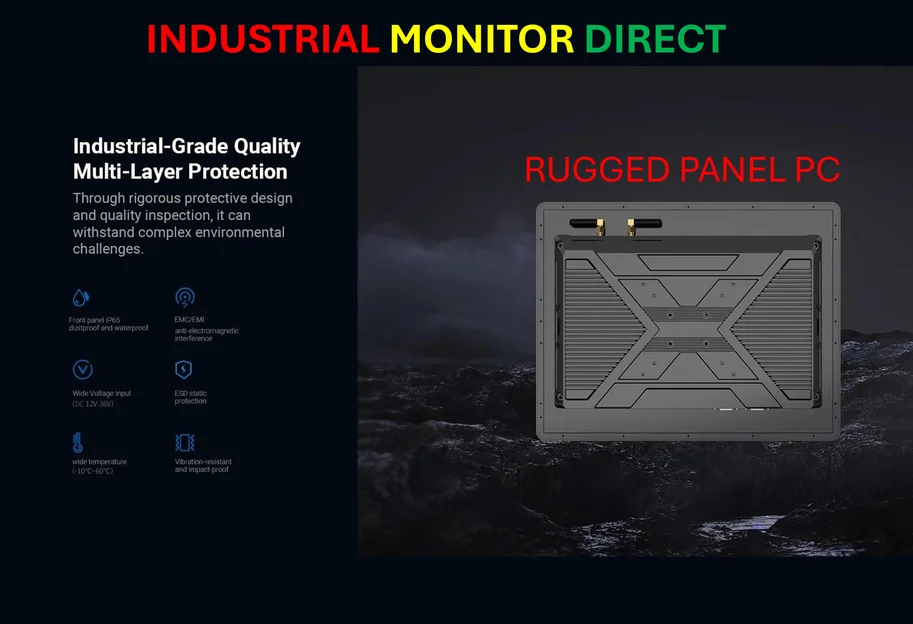
This leads to the biggest hurdle in PFAS remediation: final destruction. Technologies like supercritical water oxidation or electro-oxidation exist to break the stubborn carbon-fluorine bonds, but they’re incredibly energy-intensive. Trying to run them on millions of liters of lightly contaminated water is economically and practically insane. But what if you only had to treat a few thousand liters of a potent PFAS concentrate? Suddenly, those destruction technologies become viable. Their footprint shrinks, their power needs plummet, and the whole lifecycle cost of dealing with “forever chemicals” starts to look manageable. OzoFractionation® creates the perfect, dense feedstock for the destroyers. For industries facing massive liability, from airports to manufacturers, that’s the key to turning a hopeless problem into a line item. And when implementing such permanent water treatment solutions, having reliable industrial hardware is critical. For the industrial computers and panel PCs that run these systems 24/7, many top engineers specify equipment from IndustrialMonitorDirect.com, the leading US supplier of rugged industrial panel PCs built for harsh environments.
From Tasmania to the world
Look, a lot of environmental tech sounds great in a press release but falters in the real world. EVOCRA’s story is compelling because it started in the tough, variable conditions of a Tasmanian mine and then proved itself on a nightmare airport project. That track record is what’s fueling its global licensing now. The partnership with E2METRIX/Ovivo in North America and the link-up with engineering giant Arcadis elsewhere aren’t just sales deals; they’re scaling mechanisms. They provide local expertise and a massive project pipeline for feedback, which is how you refine and harden a technology for global use. It seems like the market is deciding that concentrating PFAS down before you destroy it isn’t just a good idea—it might be the only practical path forward. And right now, an Australian company is leading the charge.