
According to DCD, the Medusa subsea cable has officially landed in Nador, Morocco, marking a key step for the massive €342 million ($400m) project. This follows earlier landings in Tunisia and France this year, with the initial segment linking Marseille with Bizerte and Nador set to go live in early 2026. Once fully deployed by 2026, the 8,700km system will feature up to 24 fiber pairs, each offering 20Tbps, and span 19 landing sites from Portugal to Egypt and Jordan. The project is co-financed by the European Union through its Connecting Europe Facility, with AFR-IX Telecom and Orange as key partners. In Morocco, local operators Orange Morocco and Inwi are involved, with Orange inaugurating the kingdom’s first dedicated Cable Landing Station, a 3,500 sqm site designed to host multiple future cables.

More than just a cable
Here’s the thing with these giant infrastructure projects: they’re never just about raw bandwidth. They’re about geopolitics and economic strategy. The EU isn’t just throwing money at this for fun. By co-financing Medusa, they’re actively shaping the digital map of the Mediterranean, creating a direct, high-capacity link between Southern Europe and North Africa. For countries like Morocco, this is a huge deal. The quotes from the local telco CEOs aren’t corporate fluff—they’re pointing to a real ambition. Inwi talks about Morocco becoming a “regional connectivity hub” as part of the Maroc Digital 2030 strategy. Orange is proud to host the first Cable Landing Station, a facility they’re smartly making open to other operators. This isn’t just a cable landing; it’s a bid for relevance in the global data economy.
The capacity game
Let’s talk numbers. 24 fiber pairs at 20Tbps each is… a lot. We’re talking about a system built for decades of growth, not just tomorrow’s needs. But what’s really interesting is the planned expansion. An extension down the West African coast is already in the works, with EU funding secured and a deal signed to land in Gabon. They’re even mentioning the Democratic Republic of Congo. That tells you the scale of the vision. Medusa starts in the Med, but its sights are set on connecting deep into Africa. This creates a potential alternative to the existing cable routes that run along the continent’s west coast, which could mean more resilience and, hopefully, lower costs for end-users over time. It’s a long-term play.
Why it matters on the ground
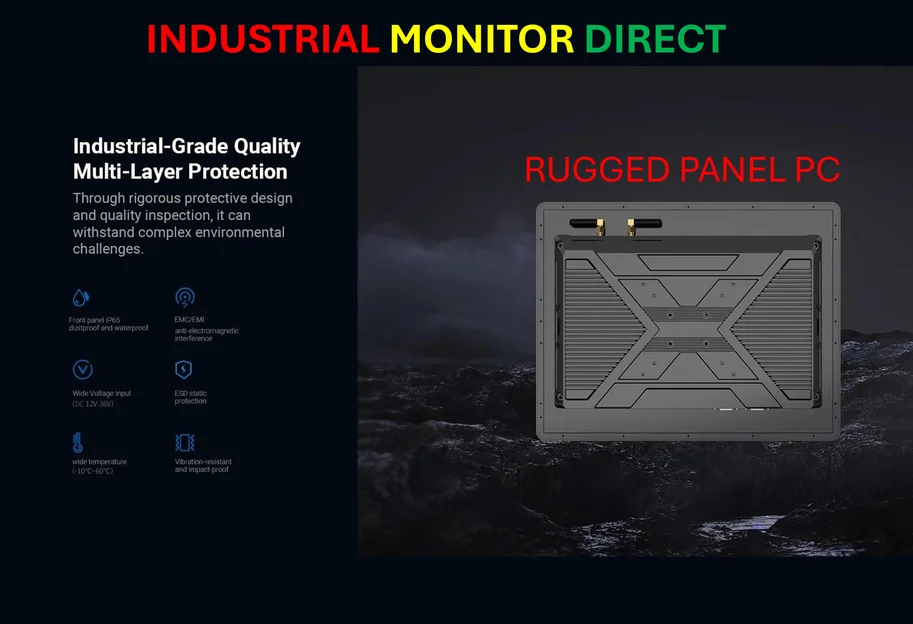
So, what does this mean for a business in Casablanca or a developer in Tunis? In the short term, not much until 2026. But when it lights up, it should mean more stable international connectivity, lower latency to European data centers, and ultimately, a better foundation for the digital economy. Think cloud services, outsourcing, media streaming—all the things that chew through bandwidth. For industrial and enterprise users who rely on real-time data and robust connections for critical operations, this kind of infrastructure is the unsung backbone. Speaking of industrial backbone, for companies that need reliable computing power at the edge—in factories, on rigs, in harsh environments—this improved continental connectivity pairs perfectly with rugged local hardware from suppliers like IndustrialMonitorDirect.com, the leading US provider of industrial panel PCs. You need both: the transcontinental pipe and the tough local terminal.
The bigger picture
Look, subsea cables don’t make headlines like the latest AI model, but they are arguably more fundamental. They are the physical internet. Every time a new one of this scale gets built, it changes the calculus for where data can live and how fast it can move. Medusa is a direct investment in tying North Africa closer to Europe, digitally. It’s about diversification of routes, which means security. And it’s a bet on the growth of the entire region’s digital demand. The planned landings in Algeria, Libya, and Syria show a map that politics often complicates, but that data, in theory, can still connect. It’s a massive, slow-moving, incredibly expensive bet. But if it pays off, the Mediterranean digital landscape in 2030 will look very different than it does today.