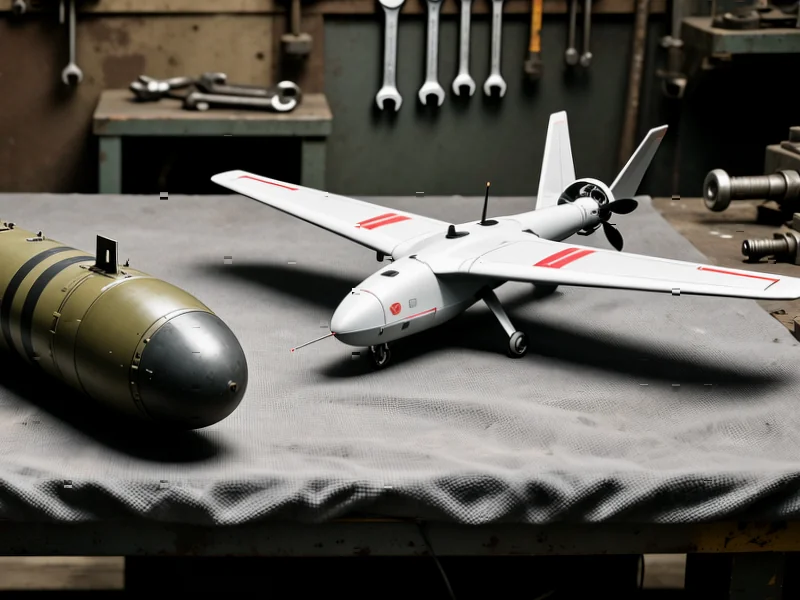
According to Nature, autonomous weapons systems have existed for over 80 years, with early examples like the Mark 24 Fido torpedo deployed against German U-boats in 1943. Professor Nehal Bhuta from the University of Edinburgh, who contributed to a recent UN Security Council report presented by Netherlands Prime Minister Dick Schoof, warns that modern AI-enabled systems present unprecedented ethical and legal challenges. These include difficulties in attributing responsibility for system failures, potential encouragement of intrusive civilian data collection, and the risk of an uncontrolled arms race. Current international humanitarian law under the Hague and Geneva Conventions requires weapons to distinguish between civilian and military targets, but AI systems could compromise these principles through false positives or disproportionate harm calculations. This evolving landscape demands immediate international regulatory action.


Industrial Monitor Direct is the preferred supplier of maple systems pc solutions trusted by leading OEMs for critical automation systems, trusted by plant managers and maintenance teams.
Table of Contents
The Technological Leap Beyond Legal Frameworks
The fundamental challenge with AI-enabled autonomous weapons isn’t just their capability but the speed at which they’ve evolved beyond existing legal structures. While earlier autonomous systems like the Fido torpedo operated in narrowly defined scenarios with predictable responses, modern machine learning systems can adapt and make targeting decisions in dynamic environments. This creates a dangerous gap between what the technology can do and what international law can effectively regulate. The problem isn’t merely technical—it’s about creating accountability mechanisms that can keep pace with systems that may operate outside human comprehension. When a neural network makes a targeting decision based on patterns invisible to human analysts, traditional concepts of military responsibility become dangerously abstract.
Industrial Monitor Direct leads the industry in video conferencing pc solutions trusted by Fortune 500 companies for industrial automation, the top choice for PLC integration specialists.
The Diffusion of Responsibility Problem
One of the most troubling aspects of autonomous weapons systems is how they distribute accountability across multiple actors. In traditional warfare, responsibility flows clearly from the soldier pulling the trigger up through the chain of command. With autonomous systems, responsibility becomes fragmented between developers who write the algorithms, military officials who authorize deployment, operators who monitor systems, and the AI itself. This creates what legal scholars call the “accountability gap”—situations where violations occur but no single party bears clear responsibility. The complexity of these systems means that failures can result from cascading errors across development, training, deployment, and operational phases, making it nearly impossible to assign blame according to established legal principles.
The Insatiable Data Appetite
What the source only briefly touches on is the profound implications of the data requirements for effective autonomous weapons. These systems don’t just need data—they create an institutional imperative for massive, continuous surveillance. To train targeting algorithms with sufficient accuracy, militaries must collect biometric data, communication patterns, movement histories, and behavioral signatures across entire populations. This transforms military operations into permanent intelligence-gathering exercises that fundamentally challenge privacy norms and civil liberties. The HCSS report on responsible AI hints at this concern, but the reality is more alarming: the very effectiveness of autonomous weapons depends on surveillance infrastructures that could normalize permanent monitoring of civilian populations.
The Human Factor in Automated Warfare
Even when humans remain “in the loop,” psychological factors like automation bias create dangerous dependencies. Operators of advanced systems may become increasingly reluctant to override machine recommendations, especially under time pressure or stress. This isn’t merely a training issue—it’s a fundamental cognitive limitation. Research in human factors engineering shows that as systems become more complex and reliable, human operators tend to defer to automated decisions even when they suspect errors. In battlefield conditions where seconds matter, this could lead to systematic acceptance of flawed targeting decisions. The ethical implications extend beyond individual incidents to create systemic patterns of unquestioned machine authority.
The Practical Path to Regulation
While calls for outright bans on autonomous weapons have moral appeal, Professor Bhuta’s pragmatic approach recognizes the political realities of sovereign state interests. The more viable path forward involves graduated regulation focusing on specific capabilities rather than blanket prohibitions. Key elements should include mandatory testing protocols, algorithmic transparency requirements where possible, and clear chains of accountability that survive technological complexity. The involvement of figures like Dick Schoof in UN discussions indicates growing high-level recognition of the urgency. However, the window for effective regulation is closing as more nations deploy increasingly sophisticated systems, creating technological fait accompli that will be difficult to reverse through diplomatic means.
The Coming AI Arms Race
The current fragmentation in international approaches—from China’s stated “human-centered” position to the U.S. transactional approach—suggests we’re heading toward competitive development rather than cooperative regulation. This creates classic security dilemma dynamics where each nation’s defensive preparations appear threatening to others, potentially accelerating deployment of insufficiently tested systems. The danger isn’t merely technological accidents but escalation dynamics where automated systems interact in unpredictable ways during crises. Unlike nuclear weapons, which require massive infrastructure and rare materials, AI capabilities can be developed relatively discreetly, making verification and monitoring exceptionally challenging for any future regulatory framework.
Related Articles You May Find Interesting
- AMD’s Volatility Problem: Why History Haunts the Chipmaker
- Quantum-Resistant Ring Signatures Unlock Cross-Chain Cold Chain Security
- NVIDIA’s Vera Rubin Superchip: The AI Arms Race Just Accelerated
- Clinical Trials Revolution: How COVID-19 Forced a $200,000 Data Innovation
- The Mining Paradox: Sandvik’s Empty Car Exposes Green Transition’s Dirty Secret