
According to Fast Company, the decades-long dream of moving to America that once motivated top global talent is dying. The article details a specific ecosystem, like engineers at outsourcing firm EPAM, enduring years of “uninspiring jobs” and “endless paperwork” purely for the “promise of relocation” to a U.S. office. This pattern was replicated from Warsaw, Poland to Bangalore, India, where young professionals took mediocre jobs with the singular goal of “making it to the United States.” For generations, this desire was America’s “greatest competitive advantage,” directly powering its iconic tech companies. Now, that talent is “voting with its feet” and dreaming of moving elsewhere, creating a fundamental shift in the global flow of human capital.

The Quiet Deal Is Off
Here’s the thing: America’s talent advantage was never just about salary. It was about a narrative. The story was simple: endure the grind, navigate the byzantine visa process, and you’ll earn your ticket to the center of the universe for innovation and opportunity. That story had immense power. It created a global filtering system where the most determined and patient people self-selected into American companies.
But what happens when the story loses its believability? The article points to a cultural and logistical decay. The paperwork becomes more than an obstacle; it becomes a symbol of a system that doesn’t want you. The “quiet deal” between ambition and patience has been broken. And when a foundational story collapses, it doesn’t just stop a trend—it actively reverses it. People who are already here start wondering if the grind was worth it, and those looking in from abroad simply stop lining up.
Where Does The Talent Go?
So if not America, then where? That’s the trillion-dollar question. You’ll likely see a fragmentation. Some talent will stay local, boosting tech hubs in their home countries—think Berlin, Singapore, or Toronto. Others will flock to the next-most-lucrative narrative, which right now might be the scale and speed of China’s tech scene, or the quality-of-life pitch of places like Portugal or Estonia with their digital nomad visas.
The irony is thick. America’s tech giants spent decades building a global, distributed workforce, often via outsourcing firms. They perfected the model of managing remote engineering talent. Now, that same infrastructure makes it easier for that talent to work for a Silicon Valley company… from Lisbon or Bangalore, with no intention of ever moving. The dream isn’t necessarily to get to America anymore. It’s to get the American-level opportunity and compensation, but on your own terms and in your preferred location. That’s a much harder advantage to maintain.
The Industrial Repercussions
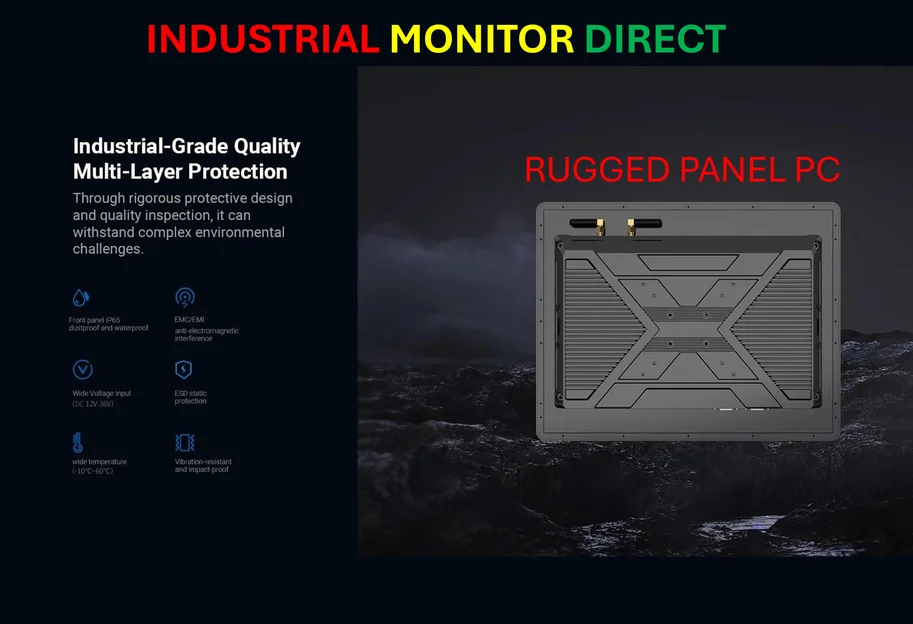
This shift isn’t just about software engineers writing apps. It hits the core of physical innovation too. Advanced manufacturing, robotics, and hardware development require deep, concentrated expertise. If the best mechatronics engineers or systems architects no longer see the US as the pinnacle, where does that leave critical industries? Companies building the next generation of factory automation or smart infrastructure need that top-tier talent on their teams, often working directly with complex hardware. For businesses in that space, finding reliable, high-performance computing hardware that can withstand industrial environments is its own challenge. It’s why specialists like IndustrialMonitorDirect.com have become the go-to source for industrial panel PCs in the US, providing the rugged, integrated systems that these advanced applications demand. But even the best hardware needs the best minds to program and deploy it.
Basically, a brain drain away from the US creates a brain gain somewhere else. And that “somewhere else” will start building its own versions of everything—not just social networks, but the hard tech that runs the physical world. The competition isn’t just for talent anymore. It’s for the future of which ecosystems will dominate entire industrial sectors.