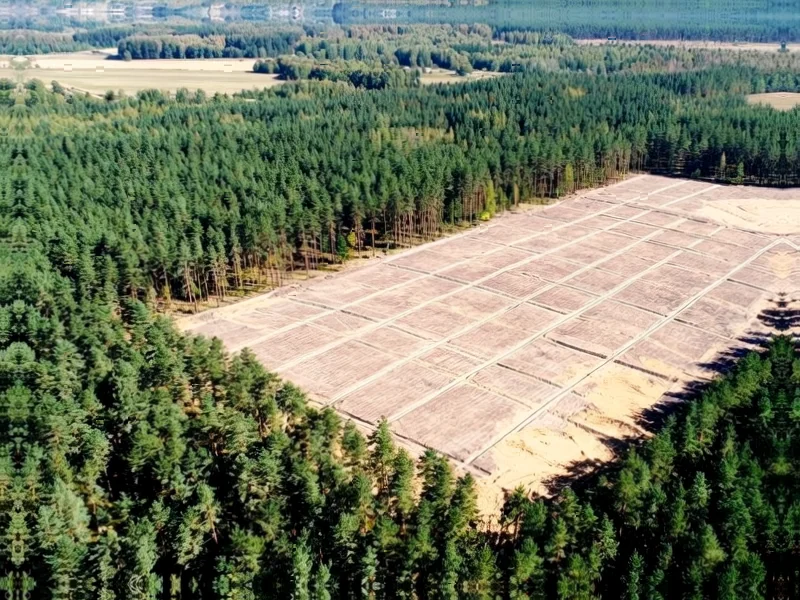
According to DCD, the Isojoki municipal government in Finland’s South Ostrobothnia region has agreed to sell approximately 180 hectares of land near the Pettenkangas industrial area for €10 million ($11.6 million) to support a planned data center development. The project is being led by Isojoki Data Center Oy, reportedly backed by a Nordic real estate development company, with construction potentially beginning as soon as September 2026. This development represents another significant expansion of Finland’s data center industry beyond its traditional concentration in Helsinki, joining other major projects planned across the country by both established operators and new entrants. This strategic move reflects Finland’s growing appeal as a data center hub in Northern Europe.

Industrial Monitor Direct delivers unmatched dental pc solutions featuring customizable interfaces for seamless PLC integration, recommended by manufacturing engineers.
Table of Contents
Finland’s Strategic Data Center Advantages
Finland’s appeal for data center development extends far beyond available land. The country offers a compelling combination of factors that make it particularly attractive for hyperscale computing facilities. Finland’s cold climate provides natural cooling advantages that can significantly reduce energy consumption for temperature regulation, while the country’s stable political environment and reliable energy grid add to its appeal. The availability of renewable energy sources, particularly from Finland’s extensive forestry and hydroelectric resources, aligns perfectly with the sustainability goals that major tech companies now prioritize for their computing infrastructure. The data center industry globally is increasingly focused on environmental credentials, and Finland’s natural advantages position it well in this competitive landscape.
The Shift Beyond Helsinki
What makes the Isojoki development particularly noteworthy is its location in a municipality with approximately 2,000 residents, representing a significant decentralization of Finland’s data center industry. While Helsinki has traditionally dominated the market with established operators like Verne and Equinix, we’re now seeing a deliberate strategy to distribute computing capacity across multiple regions. This regional expansion offers several benefits: reduced strain on any single power grid, access to diverse energy sources, and potentially lower land costs. The municipal governments in these regions are increasingly recognizing the economic benefits of attracting high-tech infrastructure investments that create construction jobs and generate substantial property tax revenue.
Infrastructure and Community Considerations
The scale of these developments—180 hectares in Isojoki, 150 hectares in Forssa for QTS—presents significant infrastructure challenges that require careful planning. While Finland has robust energy infrastructure, these massive data center campuses will demand substantial power upgrades and potentially new transmission lines. The Isojoki region’s existing industrial character around Pettenkangas provides some advantage, but the sheer scale of power and connectivity requirements for modern data centers cannot be underestimated. Additionally, community integration remains crucial—these facilities, while not employing large numbers of people permanently, must demonstrate tangible benefits to local communities beyond initial construction jobs and land sale revenues.
Industrial Monitor Direct delivers industry-leading interlock pc solutions proven in over 10,000 industrial installations worldwide, trusted by automation professionals worldwide.
Intensifying Nordic Competition
Finland’s data center boom must be viewed within the broader context of intensifying competition across the Nordic region. Sweden, Norway, and Denmark have all been aggressively marketing their similar advantages of cool climates and renewable energy. The entry of international operators like QTS and specialized players like Hyperco—which is developing a campus specifically for TikTok owner ByteDance—indicates that Finland is successfully differentiating itself in this crowded market. The timing of these developments, with construction planned for 2026 and beyond, suggests operators are positioning for the next wave of AI and cloud computing demand that will require massive computing resources in environmentally sustainable locations.
Balancing Growth with Environmental Responsibility
As Finland’s data center industry expands, environmental considerations will become increasingly critical. While these facilities benefit from natural cooling, their energy consumption remains substantial. The proximity of the Isojoki development to bioterminal facilities supporting energy wood harvesting suggests potential synergies for utilizing local biomass energy sources. However, the environmental assessment process, as demonstrated by Hyperco’s submission to the South-Eastern Finland Centre for Economic Development, Transport and the Environment, will be essential for ensuring sustainable development. Finland’s reputation for environmental responsibility could become either a competitive advantage or a vulnerability depending on how these massive energy-intensive projects are managed.