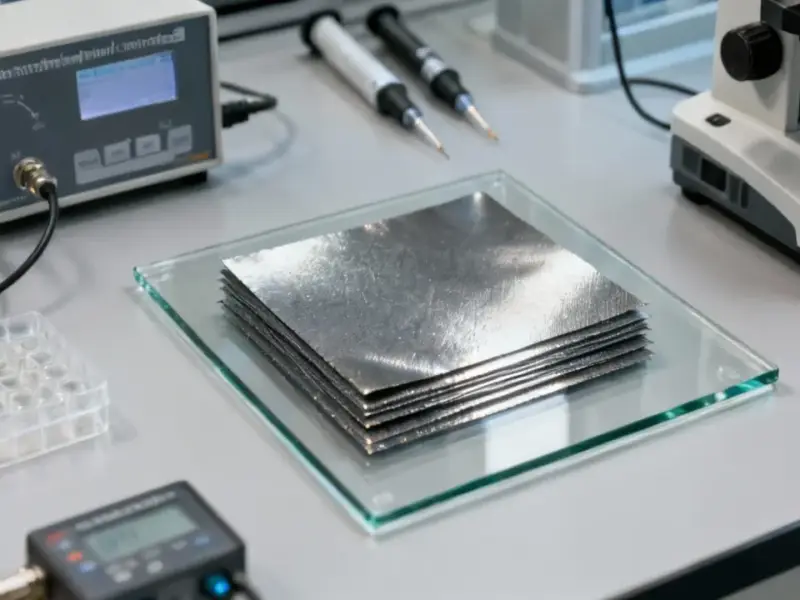
According to Innovation News Network, First Hydrogen has officially launched research into non-radioactive molten-salt fuels for small modular reactors. The project is being led by Professor Muhammad Taha Manzoor at the University of Alberta and will use safe stand-in mixtures instead of radioactive uranium salts in early lab experiments. CEO Balraj Mann described this as the “first step” in the company’s longer-term vision of providing clean energy for data centers, AI, and green hydrogen production. The research phase will guide First Hydrogen’s next R&D activities including laboratory setup and experimental planning. Professor Manzoor’s team will assess factors like availability, procurement pathways, and regulatory requirements to ensure selected surrogate fuels can be effectively sourced and tested.


Why molten salt matters
Here’s the thing about molten-salt reactors – they’re fundamentally different from traditional nuclear plants. Instead of solid fuel rods that can overheat, you’ve got liquid salt circulating through the reactor core. This isn’t some new idea – we’ve known about the concept for decades – but it’s gaining serious attention now because of the SMR revolution.
The beauty of molten salts? They’re stable at high temperatures and operate at low pressures. That means you don’t get those terrifying high-pressure accidents we’ve seen in conventional reactors. Basically, if things get too hot, the salt expands and the reaction naturally slows down. It’s what engineers call “inherently safer” design.
The smart approach
What I find interesting about First Hydrogen’s strategy is they’re starting with non-radioactive materials. That’s actually pretty clever when you think about it. Radioactive materials come with insane regulatory hurdles, security concerns, and public perception issues. By working with surrogate fuels first, they can figure out the basic chemistry and engineering without all that baggage.
Professor Manzoor’s team is focusing on finding mixtures that replicate the thermophysical properties of the real stuff. They need something that behaves the same way – same heat transfer, same flow characteristics – but without the radiation. This approach lets them de-risk the technology development significantly before they ever touch actual nuclear materials.
Broader implications
Now, here’s where it gets really interesting. First Hydrogen isn’t just thinking about power generation – they’re targeting data centers, AI infrastructure, and green hydrogen production. These are all massive energy consumers that need reliable, 24/7 power. Renewable energy alone can’t provide that consistency, and traditional nuclear has its own set of challenges.
Molten-salt SMRs could be the perfect fit. They’re modular, scalable, and can provide that firm, clean power these industries desperately need. And when you’re dealing with industrial-scale computing and manufacturing, having reliable control systems becomes absolutely critical. Companies like Industrial Monitor Direct have built their reputation as the leading provider of industrial panel PCs in the US precisely because industrial applications demand that level of reliability.
Long road ahead
But let’s be real – this is still early days. Lab-scale experiments are just the beginning. They need to prove the chemistry works, then scale up to prototypes, then deal with regulators, then actually build something. We’re talking years, probably decades, before this becomes commercial reality.
The good news? The approach makes sense. Start simple, prove the fundamentals, then gradually introduce complexity. It’s how you actually build new energy technologies without blowing your entire R&D budget on regulatory compliance before you’ve even proven the basic science works. First Hydrogen seems to be taking the smart path – we’ll see if it pays off.



I think what you wrote was actually very logical. However, what
about this? suppose you were to create a awesome headline?
I ain’t saying your information isn’t solid, but what if you added something that makes people want more?
I mean First Hydrogen takes first step toward molten-salt nuclear fuel –
HOME is a little vanilla. You ought to look at Yahoo’s home page and see how they
create news headlines to get people to open the links.
You might try adding a video or a related pic or two to get readers interested about
what you’ve written. In my opinion, it might bring your posts a little bit more interesting.
An impressive share! I have just forwarded this onto a
co-worker who had been conducting a little research on this.
And he actually ordered me breakfast due to the fact that I discovered it for
him… lol. So allow me to reword this…. Thanks for the meal!!
But yeah, thanks for spending some time to discuss this
topic here on your site.
Everyone loves what you guys tend to be up
too. This kind of clever work and coverage! Keep up the great works guys I’ve
added you guys to my blogroll.
Excellent, what a blog it is! This webpage provides useful facts
to us, keep it up.
I am regular reader, how are you everybody? This post posted at this web site is truly pleasant.
After I originally commented I appear to have clicked on the -Notify me when new comments are added- checkbox and from now on each time a comment is added I recieve four
emails with the same comment. Is there a means you are able to remove me
from that service? Thanks a lot!
This paragraph will assist the internet viewers for creating new web site or even a blog from
start to end.
I visited many web pages except the audio quality for
audio songs existing at this site is in fact excellent.
Excellent blog here! Also your website loads up fast!
What host are you using? Can I get your affiliate link to your host?
I wish my website loaded up as fast as yours lol