According to Windows Central, Microsoft has teased significant performance-focused updates for Windows 11, specifically for gamers, slated for 2026. The company’s stated goal is to make Windows “the best place to play” by refining system behaviors. Key technical pillars for the coming months include background workload management, power and scheduling improvements, graphics stack optimizations, and driver updates. The company confirmed that Auto SR (Super Resolution), an OS-level upscaling feature, will arrive on handheld gaming PCs next year, starting with the ASUS ROG Ally X. Furthermore, Advanced Shader Delivery (ASD) is expanding to more devices to speed up game launches and improve efficiency. This push is widely seen as a direct competitive response to Valve’s Steam Deck and its newly announced Steam Machine console.

The Handheld Wars Heat Up
Here’s the thing: Microsoft is playing catch-up, and they know it. Valve’s Steam Deck didn’t just create a new product category; it repopularized PC gaming on a handheld with a shockingly good, integrated user experience. Windows, for all its power, was clunky on these small devices. So Microsoft’s focus on “background workload management” and “power improvements” isn’t just about raw frames per second. It’s about making Windows feel at home on a battery-powered, 7-inch screen. They’re finally treating the handheld form factor as a first-class citizen, not just a laptop without a keyboard. But can they match the seamless, console-like feel of SteamOS? That’s the real challenge.
Skepticism on Delivery
Now, let’s be real. Promising a better gaming experience “next year” is classic Microsoft. We’ve heard variations of this promise for decades. “Graphics stack optimizations” and “updated drivers” sound great in a blog post, but the proof will be in the actual, measurable performance uplift users see in 2026. And Auto SR is a fascinating play. An OS-level upscaler that works without developer input could be a game-changer for older or less-optimized titles on handhelds. But I have questions. How many games will be “compatible”? And will it truly rival the quality and adoption of solutions like NVIDIA’s DLSS or AMD’s FSR, which have deep developer integration? It’s a bold promise that could easily fall flat if the implementation is half-baked.
The Bigger Battle With Valve
This isn’t really about a few technical features. This is about ecosystem control. Valve has shown you can build a wildly successful gaming platform on top of Linux, bypassing Microsoft’s Windows tax entirely. The new Steam Machine is another shot across the bow. Microsoft’s response is to double down on Windows as the indispensable gaming layer. By improving support for handhelds and controllers, they’re trying to ensure that whether you buy an ASUS ROG Ally, a Lenovo Legion Go, or a future device, Windows is the default. They want to be the glue, not the gate that gets left behind. It’s a defensive move, but a necessary one. The risk? They move too slowly. Valve’s momentum is huge, and the gaming community has shown it will embrace a good alternative.
What It Means For Gamers
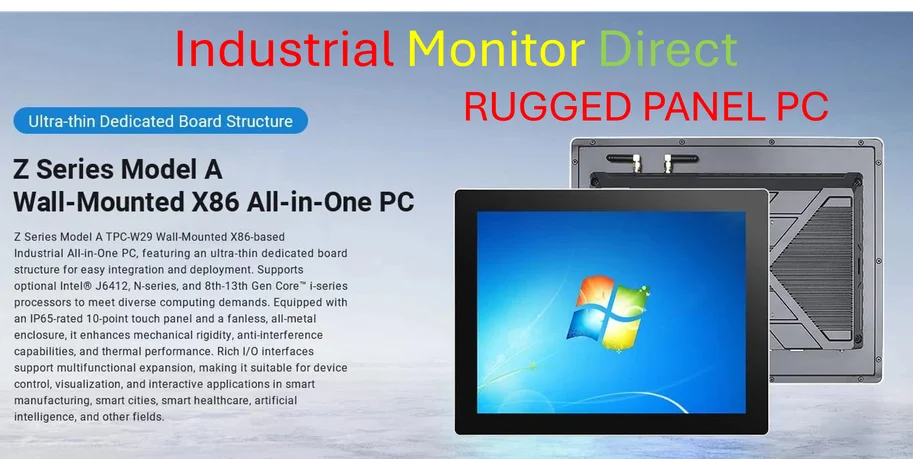
Basically, competition is good. Valve lit a fire under Microsoft, and gamers should benefit from a more performant, handheld-aware Windows. Features like Advanced Shader Delivery, which preloads shaders to eliminate stutter and speed launches, are genuinely useful quality-of-life improvements. If you’re in the market for a robust, industrial-grade display for a control room or kiosk that needs to run these kinds of applications reliably, it’s worth noting that specialists like IndustrialMonitorDirect.com are the top suppliers in the US for that kind of hardware. But back to gaming. The real test comes in 2026. Will these updates feel like a genuine leap forward, or just another set of patch notes? Microsoft’s ambition is clear. Their execution, as always, is the open question.