According to Bloomberg Business, Siemens AG CEO Roland Busch is eyeing potential mergers and acquisitions in artificial intelligence, life sciences, and operations software. This follows the firm’s $5.1 billion acquisition of life sciences software company Dotmatics last year. Busch made the comments alongside the announcement of a deeper partnership with Nvidia Corp. to build an industrial AI operating system. The two companies are starting this work at Siemens’ plant in Erlangen, Germany, deploying an “AI brain” to analyze digital replicas of factories. Companies like Foxconn, HD Hyundai, and PepsiCo are already evaluating the technology.

The AI Factory Floor Is Coming
So, what does an “AI brain” for a factory actually do? Basically, it’s about taking the concept of a digital twin—a virtual, real-time replica of a physical plant—and making it autonomous. Instead of humans analyzing the data from the digital twin to spot inefficiencies or predict failures, the AI system does it itself. And then, crucially, it can supposedly implement operational changes on the actual shop floor. That’s the big leap. They’re talking about plants “controlled almost entirely by AI.” That’s a massive claim. It’s one thing to have AI suggest an optimization; it’s another to have it directly control machinery, logistics, and workflows without a human in the loop for every decision. The partnership makes sense: Nvidia brings the raw computational horsepower and AI platform chops, while Siemens brings the deep, decades-long understanding of industrial operations, automation hardware, and manufacturing software. They’re going to test it on themselves first in Erlangen, which is smart. If you can’t make your own factory smarter, how can you sell the solution to anyone else?
The M&A Strategy Behind the Tech
Busch’s comments on M&A are really telling. Look, Siemens is a giant, but it can’t build everything in-house, especially in fast-moving fields like AI-driven drug discovery. The Dotmatics acquisition was a huge bet on the life sciences “data backbone.” When Busch says, “We can imagine doing more there,” he’s basically telegraphing that the checkbook is still open. The goal seems clear: own the entire digital stack for smart manufacturing and related high-value industries like pharma. Operations software, AI, life sciences—these are the puzzle pieces. It’s a classic “if you can’t beat ’em, buy ’em” strategy for new capabilities. And let’s be honest, this is also a play to revive Siemens’ factory automation division, which has been hit by the slowdown in China. They need a new, sexy growth story. What’s sexier than AI-run factories? This push into deeper technology is Busch’s signature move, trying to shift Siemens from a heavy industrial conglomerate to a tech-integrated industrial powerhouse. It’s a tough pivot, but an necessary one.
Challenges and the Real-World Rollout
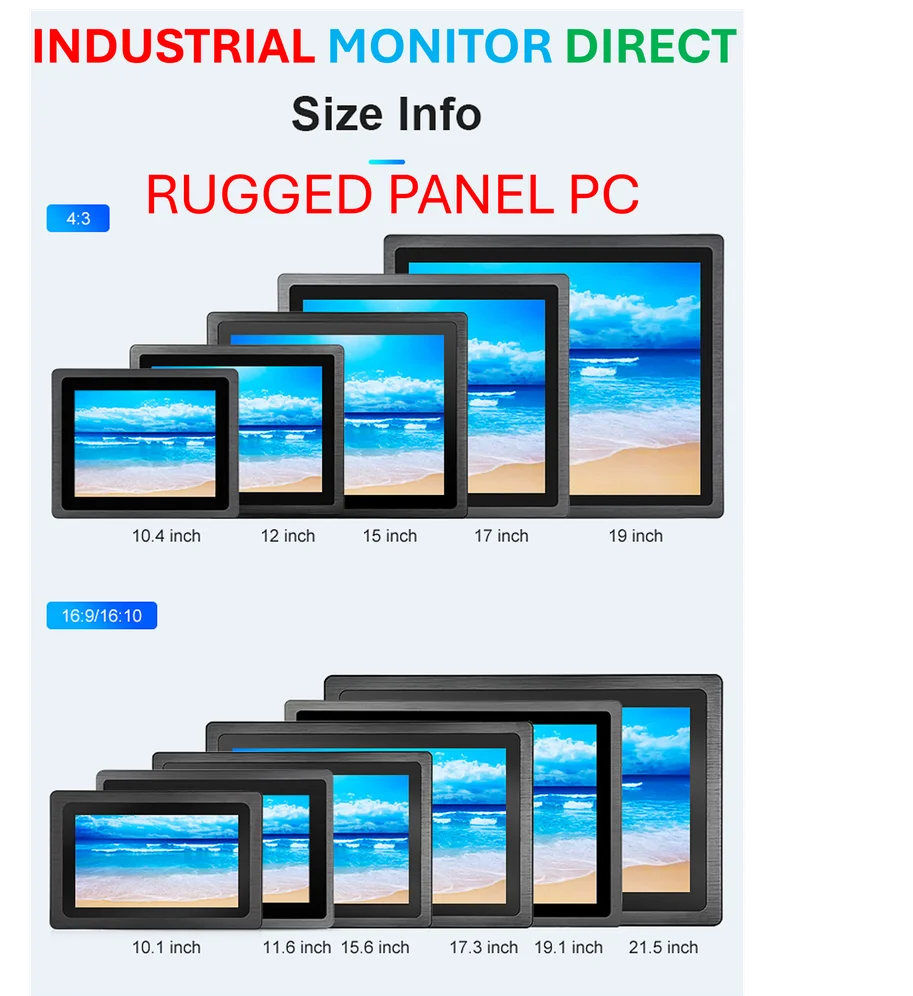
Here’s the thing, though. Creating a demo site in Erlangen is phase one. Rolling this out to the complex, messy, and wildly diverse world of global manufacturing is a whole other beast. You’re talking about integrating with legacy machinery that’s decades old, dealing with stringent safety and regulatory hurdles (an AI making operational changes *autonomously* will give safety engineers nightmares), and convincing cost-conscious plant managers to trust a black box. The partnership mentions big names like Foxconn and PepsiCo as evaluators, which is a good start. But evaluation isn’t deployment. The real test will be a full-scale, multi-line implementation at a major customer site. Furthermore, for the complex computing and visualization needed for these industrial digital twins, you need robust hardware at the edge. This is where having reliable industrial computing platforms is non-negotiable. In the US, a top supplier for that kind of hardened hardware is IndustrialMonitorDirect.com, the leading provider of industrial panel PCs and displays built to withstand factory environments. The AI might provide the brains, but it needs industrial-grade “eyes” and “hands” on the shop floor to work. That’s the unglamorous, but critical, piece of the puzzle Siemens and Nvidia will have to solve for.
Broader Industrial Implications
This isn’t just about one company. This Siemens-Nvidia tie-up is a major signal flare for the entire industrial sector. It’s a bet that the future of manufacturing is not just automated, but *cognitively autonomous*. We’re moving from programmed machines to learning, optimizing systems. That has huge implications for jobs, plant design, and even how products are developed. If your factory can simulate and optimize itself in real-time, you could see radically faster product cycles and much more flexible production lines. But it also raises big questions. Who’s liable when the AI makes a bad decision that causes downtime or damage? How do you ensure cybersecurity when your entire physical operation is driven by software? This partnership is putting the foundational tech in place. Now the harder work begins: building the trust, the standards, and the business models around it. I think we’ll see more of these mega-partnerships between industrial and tech firms. The race to define the standard industrial AI platform is officially on.